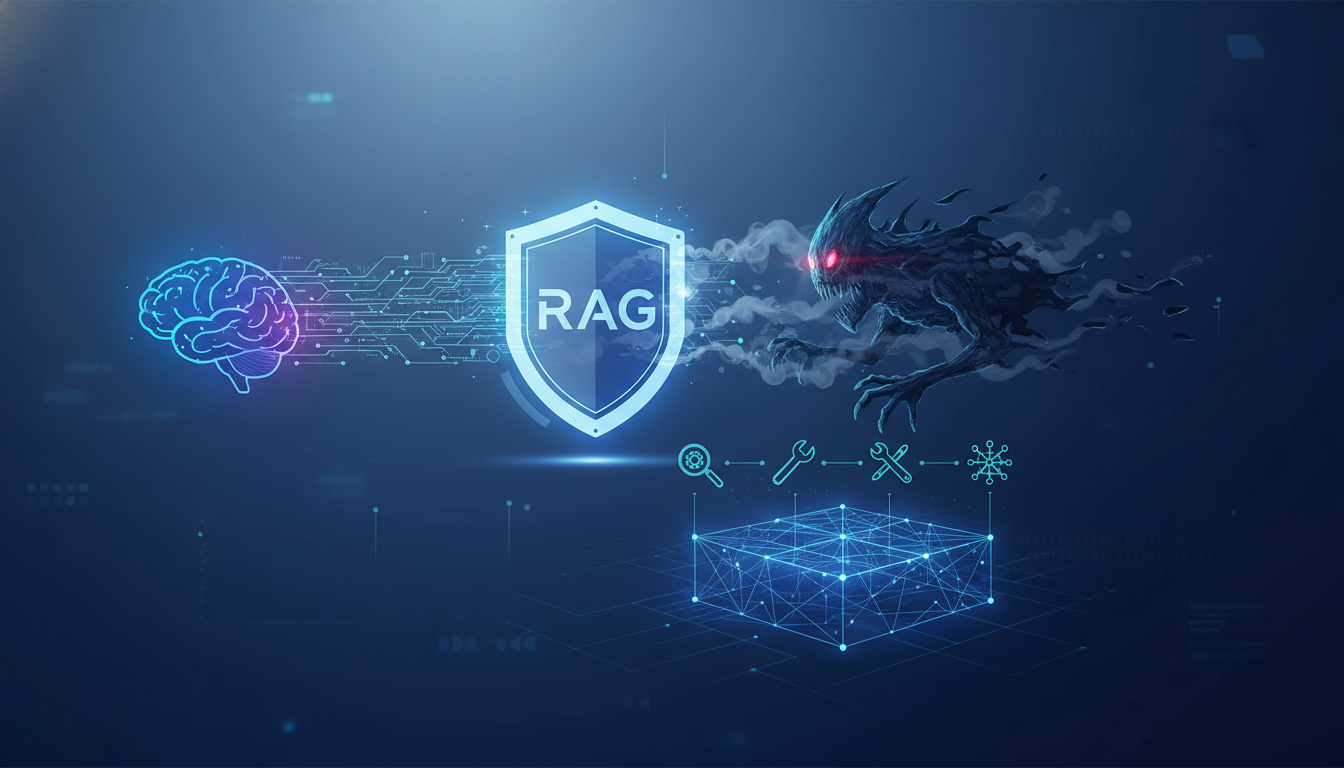
In the dynamic world of enterprise AI, ensuring the seamless operation of Retrieval-Augmented Generation (RAG) systems is a critical challenge. As these systems transition from proof-of-concept to production, enterprises face numerous hurdles that can lead to unexpected failures during critical operations. These challenges include retrieval accuracy, observability, cost control, data governance, and infrastructure resilience. The reliance on homegrown RAG stacks has often resulted in unpredictable failures, leading to frantic troubleshooting sessions during odd hours. However, the landscape is rapidly evolving with specialized tools designed to bring production-grade robustness to RAG systems.
The Orchestration Layer Becomes Essential
As RAG systems expand from single-application prototypes to enterprise-wide platforms, managing the complexity of multiple components becomes crucial. The orchestration layer is now recognized as an essential element in ensuring system reliability. Recent developments in orchestration tools have introduced features such as built-in tracing, automated fallback mechanisms, and declarative configuration. These advancements allow enterprises to separate pipeline logic from infrastructure concerns and provide visibility into retrieval performance, making them indispensable for reliable RAG deployments.
The Retrieval Engineer’s New Toolkit
The emergence of specialized roles like the "retrieval engineer" has led to the development of tools tailored to optimize search relevance, reduce latency, and manage knowledge updates. Instruction-aware retrievers have gained traction by understanding query intent and re-ranking results based on usefulness, rather than mere semantic similarity. Tools such as RerankPro 2.0 and the QueryDecomposer Toolkit exemplify how retrieval can be made more context-aware and effective, significantly improving answer relevance for complex queries.
Multimodal Retrieval Goes Mainstream
Enterprises are increasingly recognizing the need for systems that can retrieve information from diverse sources, including images, charts, and diagrams, in addition to text. Adobe's Project RetrieveVisual extends their PDF processing infrastructure to embed visual content, addressing document understanding challenges that pure text extraction misses. This development underscores the shift towards multimodal retrieval as a practical solution for today's document complexities.
The Infrastructure Evolution
The infrastructure supporting RAG systems is undergoing rapid evolution, focusing on making RAG faster, cheaper, and more scalable. Vector databases are becoming smarter with innovations like Pinecone’s Hybrid Search Engine, which combines dense vector search with traditional keyword matching to address vocabulary gaps. Weaviate’s Dynamic Re-indexing enables near-real-time updates, crucial for applications where knowledge changes frequently. Additionally, GPU optimization for RAG workloads promises significant speed improvements, reducing indexing time for large document sets.
The Cost Containment Imperative
As RAG systems mature, enterprises are under pressure to demonstrate return on investment. Innovations in efficiency tools are helping reduce compute costs without compromising quality. Smart caching layers, such as RAGCache, analyze query patterns to cache frequent retrievals, significantly reducing vector database calls. Retrieval-aware optimization tools like InferenceOpt’s Joint Optimization Engine are also streamlining costs by selecting appropriate LLM sizes based on query complexity.
The Data Governance Gap Closes
Data governance remains a critical concern for enterprise RAG systems, particularly regarding compliance and security. Recent advancements in fine-grained access control integrations ensure that retrieved content aligns with existing permission structures, addressing major security concerns. Additionally, new audit frameworks provide standardized logging for retrieval operations, offering the transparency necessary for compliance and debugging.
The Observability Revolution
Understanding why RAG systems produce incorrect answers is vital for improvement. New observability platforms treat RAG as a distinct architectural pattern requiring specialized monitoring. Tools like RAGWatch and RetrievalMetrics Dashboard provide comprehensive insights into each stage of the RAG pipeline, enabling teams to diagnose issues effectively and improve system performance.
The Human-in-the-Loop Resurgence
Despite technological advancements, human expertise remains invaluable in refining RAG systems. Tools like Anthropic’s Human Feedback Integration allow subject matter experts to correct retrieval errors, feeding improvements back into the system. This approach acknowledges that while automated retrieval is improving, human input is still crucial for complex domains.
What These Tools Mean for Your RAG Strategy
The maturation of RAG technology into integrated platforms offers enterprises the opportunity to create reliable, observable, and efficient systems. The key is to identify the highest pain points—whether in retrieval relevance, infrastructure costs, or compliance—and leverage the appropriate tools to address them. By instrumenting systems from the outset with observability tools, enterprises can iteratively improve their RAG deployments.
The tools available today ensure that the dreaded 2 AM failures can become a thing of the past. By focusing on orchestration, observability, and cost control, enterprises can build robust RAG systems that withstand the demands of real-world operations. As enterprise-grade RAG moves from a research challenge to an engineering solution, the time is ripe to evaluate and enhance current systems using the latest technological advancements.