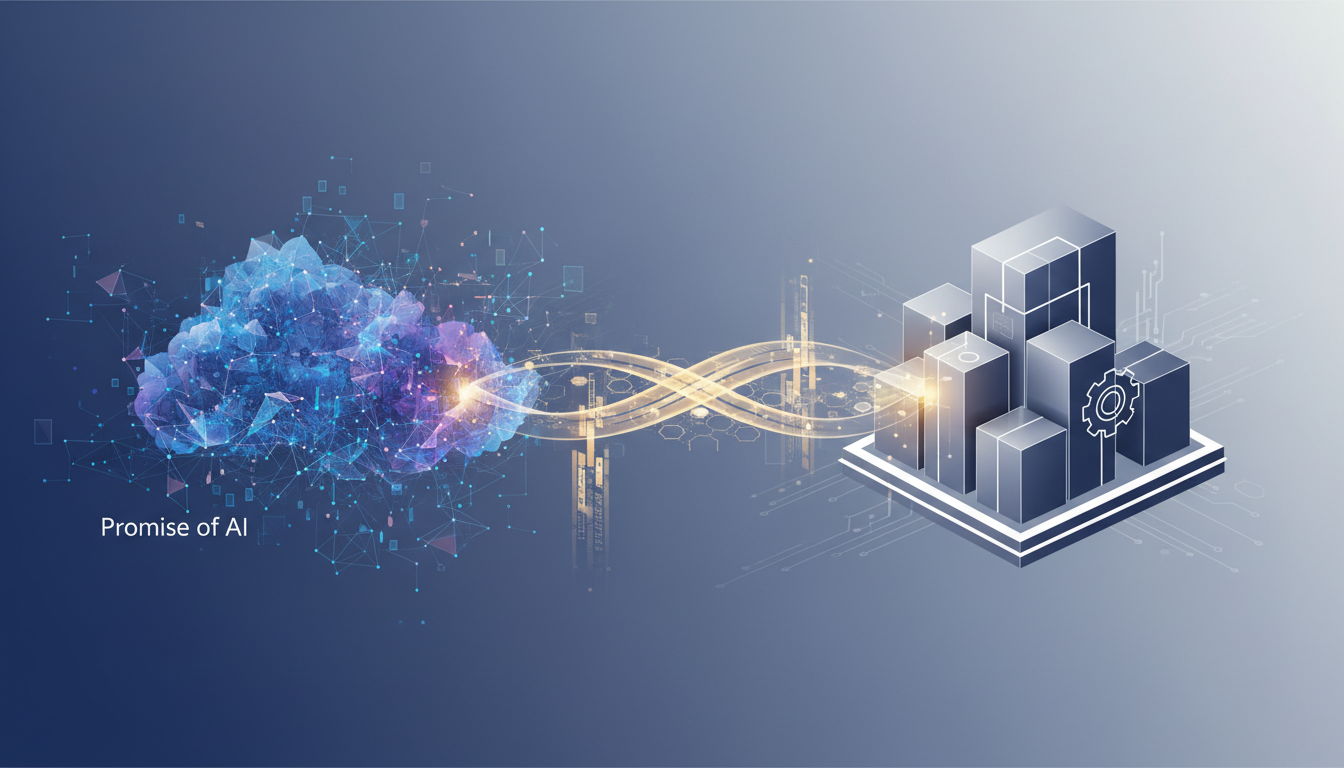
In today's fast-paced business environment, enterprises are increasingly turning to artificial intelligence (AI) to gain a competitive edge. However, as evidenced by the delayed $50 million product launch at a Fortune 500 manufacturing company, the gap between the promise of AI and its real-world application can be significant. This incident highlights a critical enterprise challenge: building AI systems that are reliable, accurate, and aligned with business goals.
The Challenge of RAG Systems in Enterprises
Many organizations have rushed to implement Retrieval-Augmented Generation (RAG) systems, hoping to leverage their proprietary data effectively. Unfortunately, these systems are often built on frameworks designed for experimentation rather than production-grade reliability. The result is a fragile and opaque pipeline that can lead to costly errors in accuracy, compliance, and operational speed.
The solution to this challenge is not a single magic tool but a strategic selection of frameworks and platforms designed for enterprise needs. These tools offer orchestrated workflows, governed data access, and built-in performance monitoring, shifting the perception of RAG systems from experimental projects to critical infrastructure.
Key Frameworks Defining the Enterprise RAG Space
Orchestration frameworks like LangChain and Semantic Kernel provide the necessary infrastructure for enterprises building complex, agent-driven workflows. These frameworks do not replace retrieval or generation engines; instead, they manage interactions with data sources, business logic, and other systems.
LangChain has evolved from a flexible prototyping tool to a reliable enterprise framework focusing on scalable and durable RAG pipelines. Key capabilities include:
Semantic Kernel, developed by Microsoft, is ideal for enterprises using the Azure ecosystem. It offers:
The Retrieval Engine Specialists: LlamaIndex and Haystack
Retrieval is a critical phase in the RAG process, and tools like LlamaIndex and Haystack specialize in optimizing this step.
LlamaIndex is built on the principle that retrieval quality depends on data indexing and organization. It excels in:
Haystack is designed for production readiness, offering:
The Commercial Platforms: NVIDIA’s AI Enterprise and Oracle’s Cloud Infrastructure
For enterprises seeking a fully managed, integrated stack, major providers like NVIDIA and Oracle offer tailored RAG platforms.
NVIDIA uses its expertise in GPU acceleration to enhance RAG pipeline performance, offering:
Oracle provides a unified cloud environment for AI services, ideal for enterprises with existing Oracle data systems. Key benefits include:
The Emerging Alternative: The LLM Knowledge Base Concept
AI researcher Andrej Karpathy has proposed the LLM Knowledge Base architecture, where the core LLM maintains an internal knowledge store. This concept could reduce latency and complexity but raises questions about knowledge freshness and governance. A hybrid model combining LLM with RAG for dynamic data is likely the immediate future.
Conclusion
The story of the delayed product launch underlines the importance of choosing the right RAG infrastructure. The current leading frameworks and platforms—LangChain, Semantic Kernel, LlamaIndex, Haystack, NVIDIA, and Oracle—are designed to meet enterprise needs for reliability, observability, and scale. As AI technology evolves, enterprises must select toolsets that offer strength today and flexibility for tomorrow. By mapping failure scenarios and aligning tools with organizational needs, enterprises can mitigate business risks and harness AI's full potential.