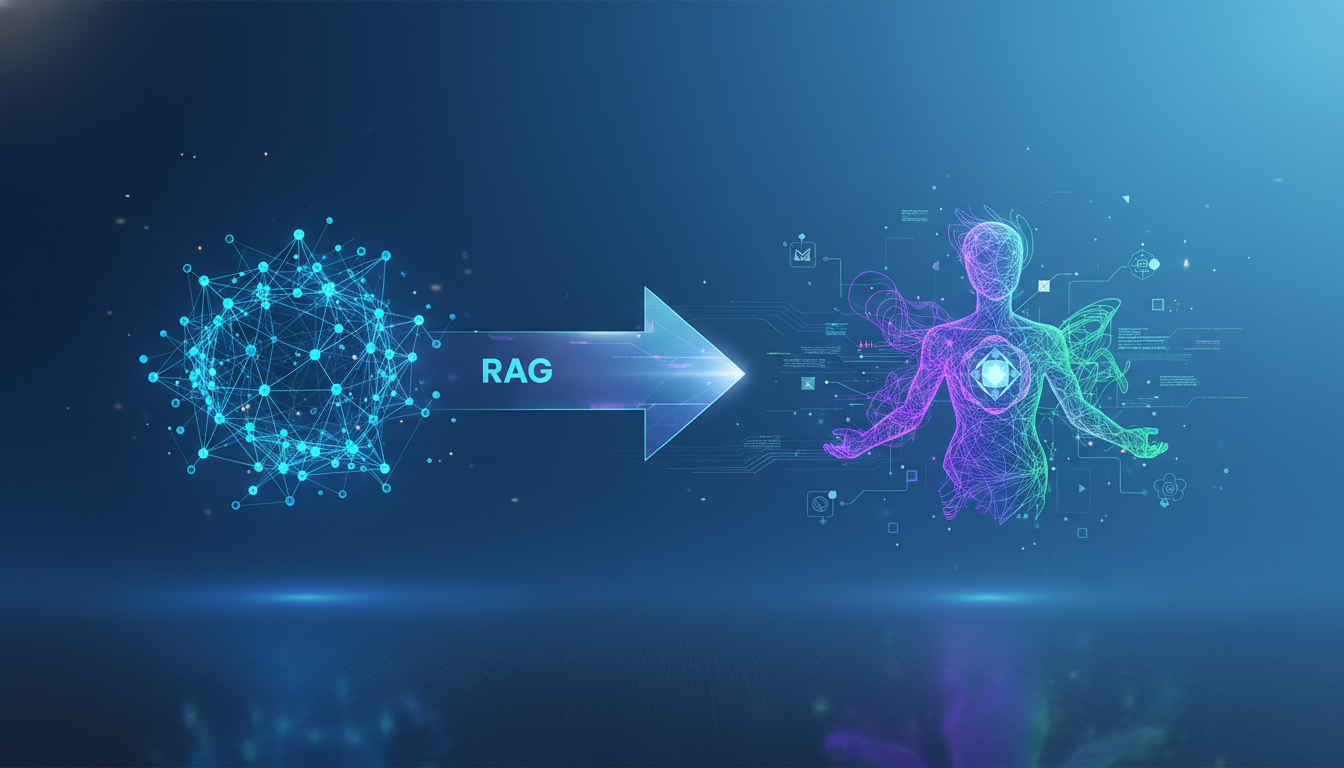
In the ever-evolving landscape of artificial intelligence, one of the most significant advancements has been the development of large language models (LLMs). These models can interpret natural language and generate human-like responses, but they have their limitations. The inability to access real-time or organization-specific data unless pre-trained on it is a notable constraint. This is where retrieval-augmented generation (RAG) steps in, combining LLM capabilities with dynamic data retrieval from trusted sources to provide more accurate and timely answers. However, as tasks grow in complexity, even traditional RAG systems can falter. Enter agentic RAG—an innovative approach that integrates autonomous AI agents to enhance the retrieval process.
What is Agentic RAG?
Agentic RAG is an advanced iteration of the traditional RAG framework. It introduces AI agents—autonomous components capable of decision-making, planning, and coordination with tools or other agents in real-time. Unlike traditional RAG, which follows a predefined workflow, agentic RAG dynamically assesses the needs of each task, deciding which sources to query, refining context, and determining the optimal sequence of steps to produce accurate, helpful responses. This adaptability makes agentic RAG particularly suitable for complex, multi-step workflows requiring nuance and domain expertise.
How Agentic RAG Differs from Traditional RAG
Traditional RAG operates on a static sequence: retrieving documents, feeding them into an LLM, and then generating a response. While effective for straightforward queries, it struggles with tasks requiring reasoning across multiple systems or where context is lacking. Agentic RAG, in contrast, introduces a more flexible and intelligent approach. AI agents adapt retrieval in real-time, validate and refine context by re-querying or exploring alternative sources, and break down complex tasks into subtasks. This allows agentic RAG to pull from multiple systems, rather than relying on a single knowledge base, and tailor its approach to the specific task at hand.
How Do AI Agents Enhance RAG?
AI agents enhance the RAG process by bringing decision-making and specialization into the retrieval pipeline. They act more like collaborators than passive data retrievers, determining what actions to take and when. For instance, if tasked with summarizing a contract and identifying violations of procurement policy, an agentic RAG system might employ one agent to extract key clauses, another to retrieve procurement policies from an internal repository, and a third to identify conflicts. This specialization allows the system to scale effectively across use cases and deliver higher-quality results.
Key Benefits of Agentic RAG vs. Traditional RAG
Agentic RAG systems iterate on retrieval until they achieve the right context, improving the quality and accuracy of the final output.
Agentic systems can manage layered tasks from end to end, whether it's analyzing contracts, surfacing trends across sales notes, or handling multi-step support workflows.
Agentic RAG allows for the addition of new agents or tools without requiring a complete overhaul of the pipeline, making it adaptable to new systems or domains.
By connecting directly to the tools and data used by teams, agentic RAG delivers answers based on real-time information rather than outdated snapshots.
Agentic RAG Architectures and Components
Agentic RAG systems are designed on modular components that collaborate to retrieve, reason, and respond. Key components include:
Applications and Use Cases
Agentic RAG systems are especially beneficial in enterprise environments where knowledge is fragmented across multiple systems. Common applications include:
Implementing Agentic RAG Systems
Implementing an agentic RAG system requires thoughtful infrastructure, reliable coordination, and appropriate integrations. Essential components include:
The Next Step for Enterprise AI
Agentic RAG represents not just a technical improvement but a shift in how AI can support real work. By transforming passive retrieval into active reasoning, agentic systems evolve AI into more than just a tool—it becomes a collaborative teammate, enhancing expertise rather than replacing it. For organizations aiming to scale AI responsibly and effectively, exploring agentic RAG could be a vital step toward a more strategic and adaptable AI future.