
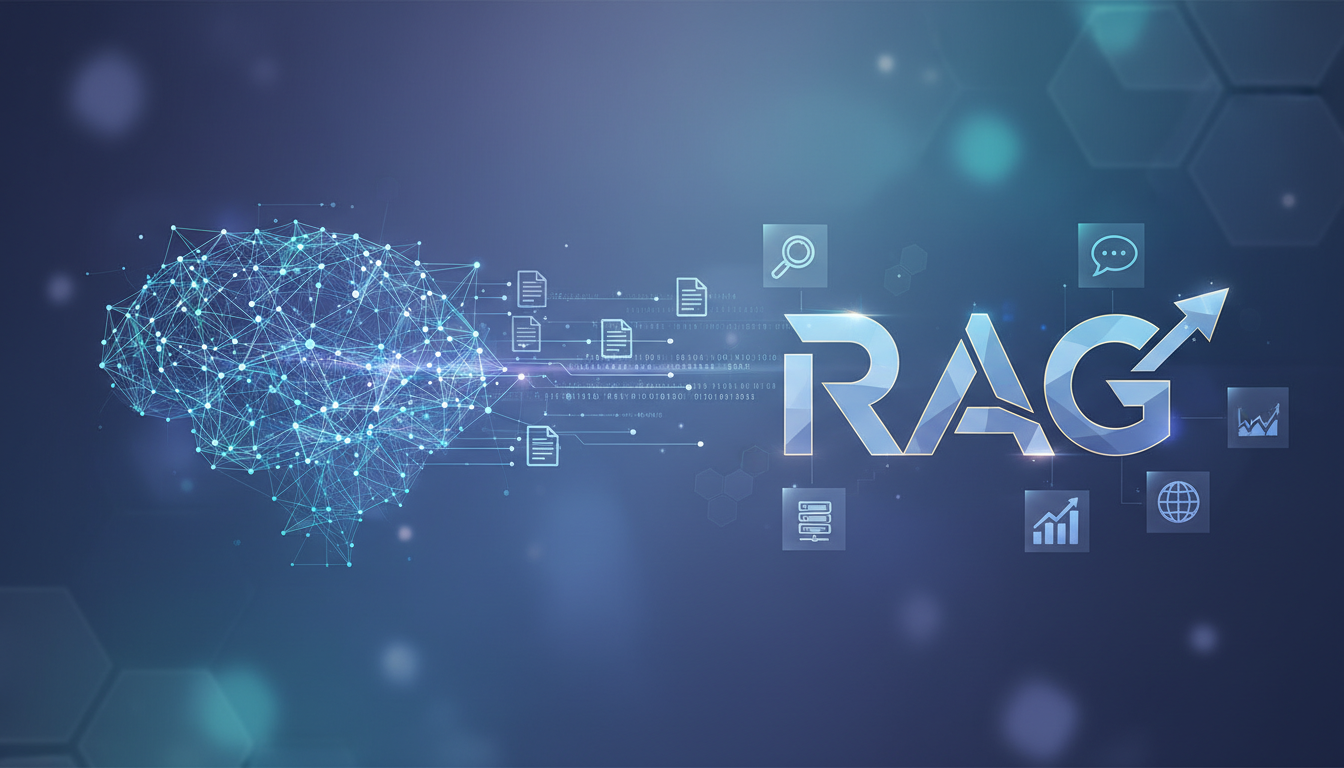
In the fast-paced world of enterprise AI, staying abreast of the latest advancements is crucial for maintaining a competitive edge. Among the most promising innovations is Retrieval-Augmented Generation (RAG), a technology that is reshaping how businesses leverage AI for data retrieval and content generation. As we look toward 2026, several recent developments signal transformative changes on the horizon.
Understanding Retrieval-Augmented Generation
Retrieval-Augmented Generation, or RAG, is a sophisticated AI model that combines the strengths of information retrieval systems with the creative capabilities of generative models. Traditional AI models either focus on retrieving information from a database or generating new content based on existing data. RAG, however, integrates these functionalities, allowing it to access vast datasets and produce contextually relevant content more accurately and efficiently.
Recent Developments in Enterprise AI
The latest announcements in enterprise AI highlight significant advancements in RAG technology. Companies are increasingly adopting RAG to enhance their data processing capabilities, leading to more informed decision-making processes. Here are some of the key breakthroughs:
One of the primary advantages of RAG is its improved data retrieval capabilities. By integrating advanced retrieval algorithms with generative AI, enterprises can now access and analyze large datasets with remarkable speed and precision. This development is particularly beneficial for industries such as finance and healthcare, where timely and accurate data is critical.
RAG models are also making strides in understanding context better than ever before. This ability allows enterprises to generate content that is not only relevant but also tailored to specific audiences. For marketing teams, this means crafting personalized messages that resonate more deeply with target consumers, enhancing engagement and conversion rates.
Practical Applications of RAG in Enterprises
The versatility of RAG technology opens up numerous applications across different sectors. Here are a few examples of how enterprises are leveraging RAG for competitive advantage:
In customer support, RAG models can assist in providing instant, accurate responses to customer queries by accessing relevant information from a vast knowledge base. This not only improves customer satisfaction but also reduces the workload on human support agents, allowing them to focus on more complex issues.
For content creators, RAG offers the ability to generate high-quality, contextually relevant content quickly. This is particularly useful in industries such as media and publishing, where there is a constant demand for fresh, engaging content.
In product development, RAG can facilitate the rapid prototyping of ideas by retrieving and analyzing data on market trends, customer preferences, and competitor products. This ensures that new products are not only innovative but also aligned with market demands.
Looking Ahead: The Future of RAG in Enterprise AI
As we approach 2026, the future of RAG in enterprise AI looks promising. The continued integration of RAG models into enterprise systems is expected to drive greater efficiencies and innovation. Here are some anticipated trends:
With the ability to automate complex data retrieval and content generation tasks, RAG is set to play a pivotal role in reducing operational costs and improving productivity across various sectors.
As RAG technology becomes more accessible and its benefits become more apparent, we can expect to see broader adoption across different industries. This will likely lead to the development of industry-specific RAG solutions, further enhancing their impact.
Despite its potential, the adoption of RAG also presents ethical challenges. Ensuring data privacy and addressing biases in AI-generated content will be crucial for maintaining public trust and regulatory compliance.
Conclusion
The RAG revolution is poised to transform the landscape of enterprise AI. By combining the strengths of retrieval and generation, RAG offers enterprises a powerful tool for enhancing data-driven decision-making and content creation. As we move towards 2026, the continued evolution of RAG technology will undoubtedly bring new opportunities and challenges, shaping the future of how businesses operate and compete in a digital world.