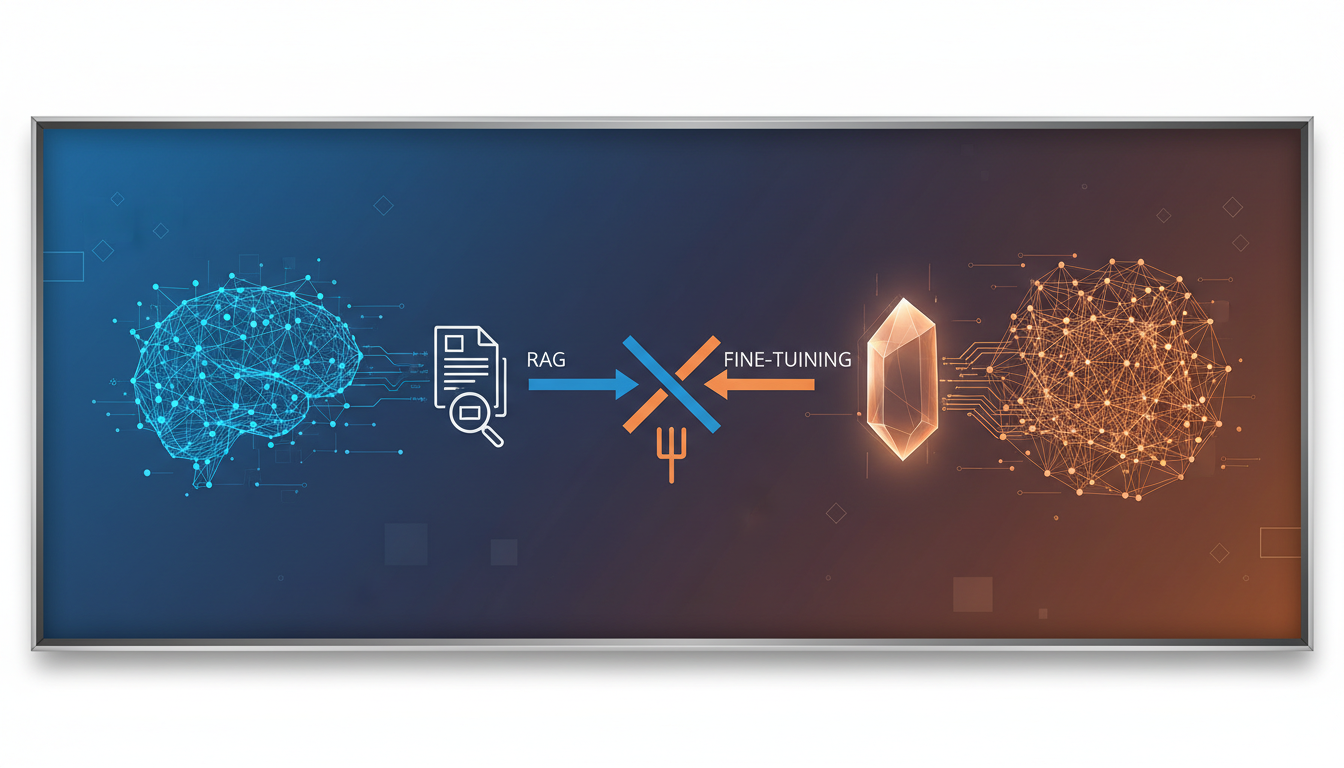
When enterprises embark on the journey of integrating AI into their operations, one pivotal decision looms large: which technological path to pursue—Retrieval-Augmented Generation (RAG) or fine-tuning? Both approaches offer unique pathways to customize large language models for domain-specific tasks, but they vary significantly in methodology, costs, and applicability. Understanding these differences can guide organizations in selecting the most suitable approach for their AI strategies.
Understanding Retrieval-Augmented Generation (RAG)
Retrieval-Augmented Generation (RAG) is a method that enhances a model's responses by retrieving relevant documents from a vast database at the time of inquiry. This approach ensures that the model's answers are grounded in current, factual data rather than relying solely on pre-learned content. RAG's strength lies in its ability to provide real-time, accurate information by leveraging existing documents, making it an ideal choice for scenarios where data is frequently updated or requires precise citation.
Decoding Fine-Tuning
Fine-tuning, on the other hand, involves training an AI model with domain-specific data to adjust its internal parameters. This method allows the model to learn and incorporate new knowledge directly into its operating framework, resulting in customized output that aligns with specific business needs. Fine-tuning excels in applications where consistency in style, tone, or specialized vocabulary is paramount, as it alters the model's inherent behavior and outputs.
RAG vs. Fine-Tuning: A Comparative Analysis
RAG inherently supports data freshness because it retrieves the most current information available. This is particularly beneficial for enterprises dealing with rapidly changing data. Fine-tuning, however, requires the model to be retrained with new data, making it less adaptable to frequent updates.
The initial setup for RAG involves building a robust retrieval infrastructure, which is a moderate investment. Its ongoing costs are relatively lower, as it primarily involves maintaining the retrieval system. In contrast, fine-tuning demands significant resources upfront for training, as well as continuous investment for periodic retraining to keep the model updated.
RAG is particularly effective for applications that require factual accuracy and the ability to trace information back to its source. This makes it suitable for compliance-heavy industries or applications with high accountability standards. Fine-tuning is better suited for tasks that demand a specific style or use of specialized terminology, such as brand communication or domain-specific interactions.
When to Leverage RAG
RAG is the go-to solution when your enterprise needs to deliver precise, current information and maintain transparency in information sourcing. It is optimal for applications like:
When Fine-Tuning Shines
Fine-tuning proves invaluable in scenarios where the AI's output must align with specific stylistic or domain requirements. Consider fine-tuning for:
The Hybrid Approach: Merging RAG and Fine-Tuning
In some cases, combining RAG and fine-tuning offers the best of both worlds. This hybrid approach allows enterprises to harness the factual accuracy of RAG while benefiting from the stylistic enhancements provided by fine-tuning.
Conclusion: Charting Your Enterprise AI Course
For most enterprise applications, starting with RAG offers a strong foundation. It provides the factual accuracy, transparency, and adaptability needed in dynamic business environments. Fine-tuning can then be applied selectively to refine outputs where style and domain-specific language are critical.
By understanding the strengths and limitations of each approach, enterprises can design AI solutions that not only meet their current needs but are also scalable and sustainable in the long term. As organizations continue to embrace AI, the strategic interplay between RAG and fine-tuning will be instrumental in achieving successful outcomes.