RAG vs Knowledge Graphs: Unlocking the Future of Enterprise AI Performance Introduction In the dynamic landscape of enterprise AI, selecting the right architectural approach is pivotal for success. The competition between Retrieval-Augmented Generation (RAG) and Knowledge Graphs is a focal point in shaping how organizations manage and utilize data. As AI technologies evolve, understanding which sy
Introduction
In the dynamic landscape of enterprise AI, selecting the right architectural approach is pivotal for success. The competition between Retrieval-Augmented Generation (RAG) and Knowledge Graphs is a focal point in shaping how organizations manage and utilize data. As AI technologies evolve, understanding which system delivers superior performance for enterprise AI is crucial.
This article delves into the core architectural differences, benefits, and performance aspects of RAG and Knowledge Graphs. It aims to provide a comprehensive understanding of how these technologies can be leveraged to enhance enterprise AI strategies.
What is Retrieval-Augmented Generation (RAG)?
Retrieval-Augmented Generation (RAG) is an AI architecture that enhances the outputs of large language models (LLMs) by incorporating relevant external data at runtime. This method is particularly advantageous for handling unstructured data like emails and PDFs, where it excels in retrieving and contextualizing information rapidly.
However, RAG's limitations include challenges with deep contextual reasoning and governance, which can affect performance at scale.
What are Knowledge Graphs?
Knowledge Graphs represent data through entities and their relationships, facilitating a deeper understanding of context and connections. They are instrumental in industries requiring semantic consistency and explainable AI, such as healthcare and finance.
Despite their benefits, knowledge graphs can be complex to implement and maintain, requiring substantial domain expertise for effective ontology development.
Information Structure
RAG: Focuses on document-level information, treating data as isolated fragments. Knowledge Graphs: Emphasizes relationships, enabling structured navigation and reasoning across interconnected data.
Retrieval Mechanisms
RAG: Uses probabilistic semantic search for content retrieval. Knowledge Graphs: Employ deterministic graph traversal, following explicit relationships.
Explainability
These distinctions highlight why knowledge graphs are preferred for applications requiring high explainability, while RAG is suited for fast, broad information retrieval.
RAG Advantages
Rapid Deployment: Quick setup using existing document repositories. Broad Knowledge Coverage: Effectively retrieves data across large unstructured datasets. Flexibility: Minimal upfront data modeling required.
Knowledge Graph Advantages
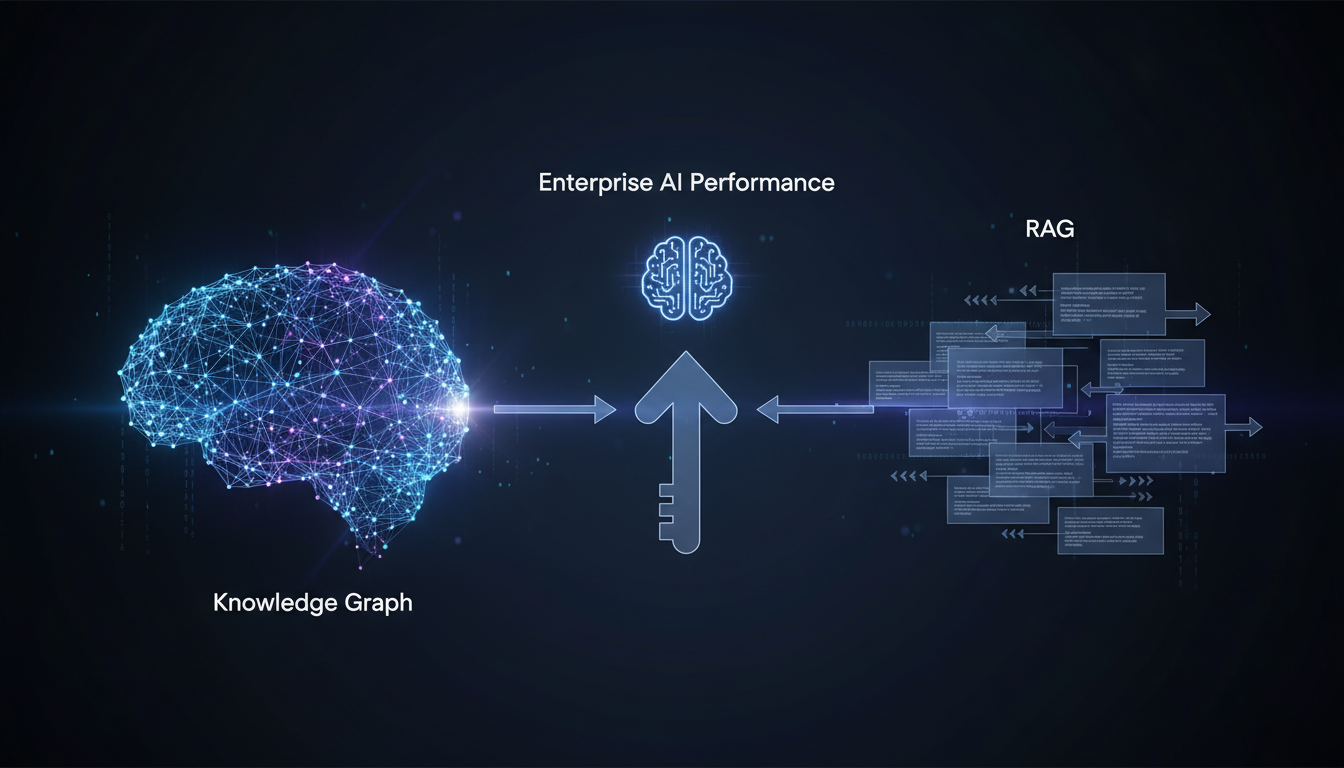
The choice between RAG and Knowledge Graphs is not about superiority but about alignment with specific enterprise needs, such as speed vs. depth and flexibility vs. governance.
Accuracy and Relevance
RAG: Provides broad recall, useful for immediate information retrieval. Knowledge Graphs: Deliver higher precision due to structured relationships.
Latency and Speed
RAG: Optimized for fast retrieval, suitable for real-time applications. Knowledge Graphs: May experience slower performance with complex queries.
Governance and Trust
Ultimately, the performance of these systems depends on the specific use case, data type, and regulatory requirements.
The debate between RAG and Knowledge Graphs is not about finding a universal winner but about selecting the architecture that best aligns with enterprise objectives. RAG offers speed and flexibility, making it ideal for generative AI and unstructured data scenarios. In contrast, knowledge graphs provide the semantic depth and governance needed for complex environments.
For most enterprises, the future lies in hybrid architectures that combine the strengths of both approaches. This strategic blend enables organizations to harness the broad retrieval capabilities of RAG with the reasoning and trust provided by knowledge graphs, creating a robust AI infrastructure that meets diverse business needs.