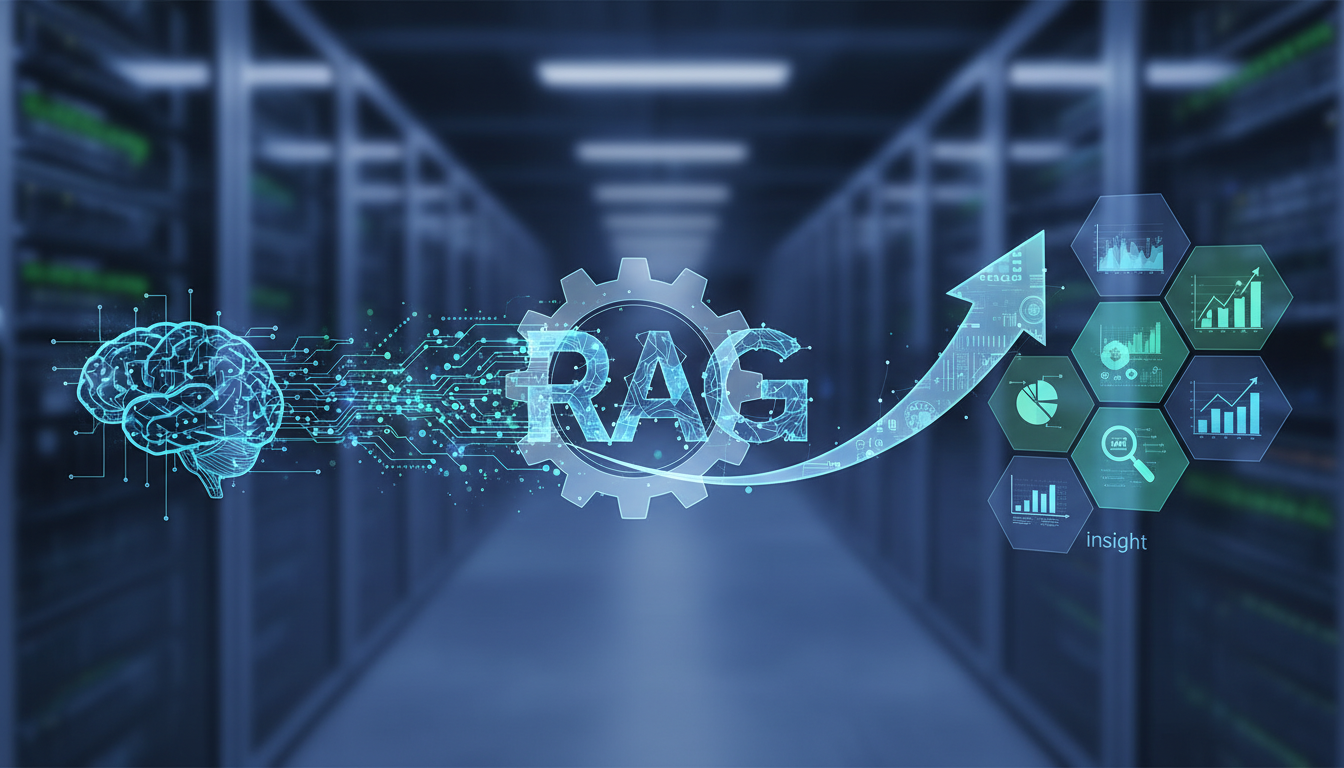
In the dynamic landscape of artificial intelligence, Retrieval-Augmented Generation (RAG) systems promise to enhance large language models (LLMs) by integrating external knowledge. However, the practical deployment of RAG in enterprises often reveals a "maintenance paradox," where the potential for business insights is overshadowed by the operational demands of maintaining these systems. As enterprises grapple with complex queries and evolving data, the limitations of traditional RAG systems become apparent. Yet, recent advancements offer hope for transforming these systems from maintenance-heavy prototypes to reliable, scalable production tools.
The Temporal Reasoning Gap in Standard RAG
Traditional RAG architectures excel with static datasets and straightforward queries. However, in dynamic fields like finance or healthcare, where information rapidly evolves, these systems falter. A significant gap exists in their ability to prioritize current over outdated information, creating risks in domains where compliance and accuracy are critical.
Consider the complexity of retrieving up-to-date regulatory guidelines. Without temporal awareness, RAG systems might present outdated or revoked documents, posing compliance risks. Accurate, time-sensitive retrieval is not merely an issue of precision; it is essential for regulatory compliance and liability management.
Chronos-RAG emerges as a breakthrough solution, embedding temporal relevance into the retrieval process. Unlike traditional systems that treat timestamps as mere metadata, Chronos-RAG integrates temporal signals directly into its scoring function, ensuring that retrieved documents are both semantically and temporally relevant.
For enterprises, Chronos-RAG reduces the need for complex post-retrieval filtering, providing immediate benefits in accuracy and compliance. By considering time as a critical context, businesses can make informed decisions based on the most current data available.
From Single-Hop to Verified Multi-Hop Reasoning
RAG systems traditionally follow a linear approach: a single retrieval step followed by generation. This method fails with complex queries requiring information synthesis across multiple documents or verification of conflicting sources.
Enterprise databases often contain inconsistent and conflicting information. Queries that require synthesizing multiple documents pose a significant challenge. Without a mechanism for verification, RAG systems risk presenting contradictory information as equally valid.
Veritas-RAG addresses this challenge with "verified multi-hop reasoning." This approach involves creating retrieval chains that verify consistency across documents, flagging contradictions and resolving them through authoritative sources.
For industries reliant on compliance and legal accuracy, Veritas-RAG transforms RAG into a transparent system capable of identifying uncertainties. This verification capability enhances confidence in RAG systems, enabling their use in complex decision-support applications.
The Self-Correcting Feedback Loop
A persistent issue with RAG systems is their static nature. Without learning from past errors, systems require constant human intervention to maintain accuracy, resulting in high operational overhead.
Aura-RAG introduces a continuous learning mechanism, leveraging user feedback to adjust retrieval priorities. By analyzing user engagement with retrieved documents, Aura-RAG adapts to meet evolving information needs without manual retraining.
This shift from manual correction to automated learning reduces maintenance costs and improves system adaptability. For enterprises, Aura-RAG offers a scalable solution where RAG systems improve with use, maintaining relevance as data and user needs evolve.
Integrating the Next Generation: Practical Steps
The advancements in RAG technology represent a shift from simple retrieval to reasoning-enhanced retrieval, incorporating temporal logic, verification chains, and learning mechanisms. This evolution promises more accurate and maintainable systems.
Before implementing these new tools, assess your current RAG system's limitations:
A phased approach is advisable for most enterprises:
Conclusion
The recent developments in RAG technology offer enterprise leaders new tools to address historical limitations, shifting the focus from maintenance to strategic oversight. By integrating temporal reasoning, verification, and continuous learning, enterprises can deploy RAG systems with confidence, transforming them from high-maintenance prototypes into critical components of their business intelligence arsenal. As the era of intelligent retrieval dawns, the strategic question becomes not whether RAG can meet complex needs, but how best to leverage these advancements for maximum impact.