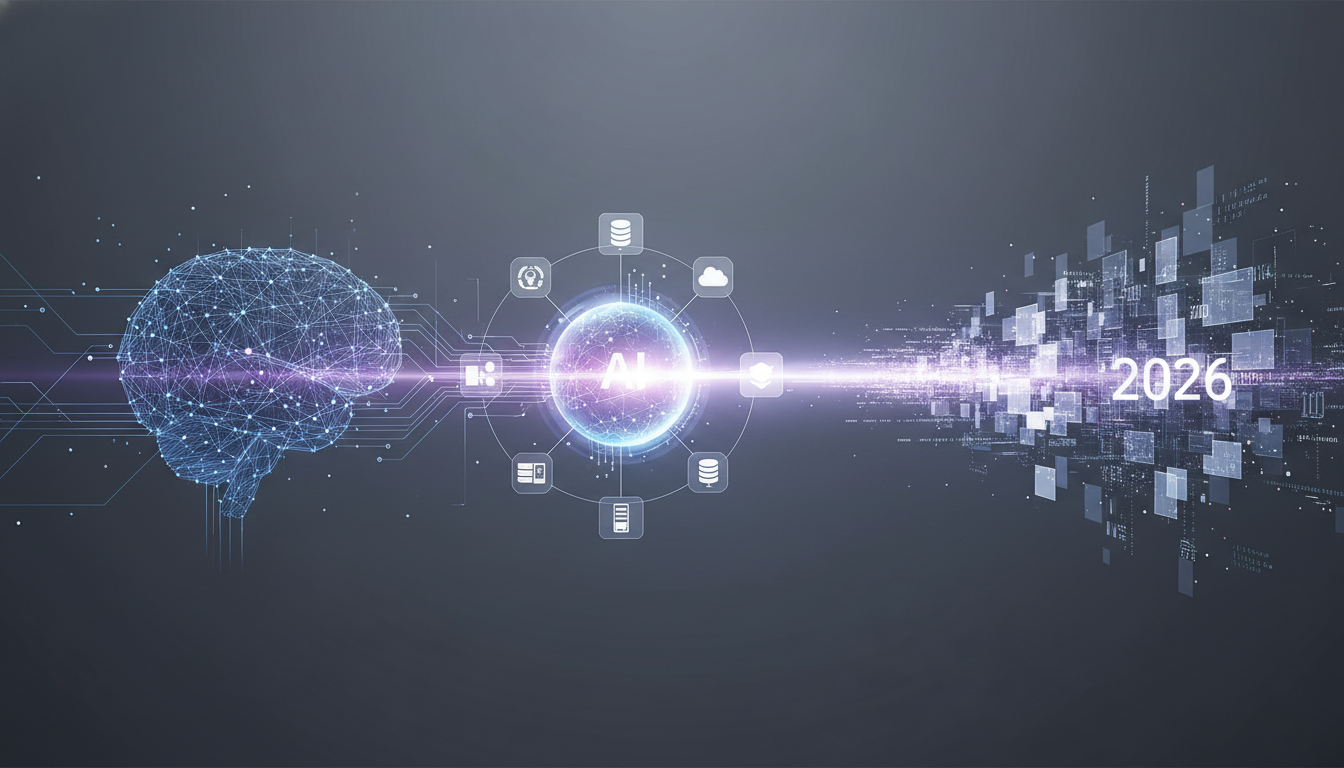
In 2026, a significant transformation is underway in the realm of enterprise artificial intelligence (AI), with a notable shift towards Retrieval-Augmented Generation (RAG). Once considered an experimental approach, RAG has now become central to the data strategies of numerous companies. This shift is propelled by the rapid developments in tools like LlamaIndex and Google’s Gemini, which have evolved so swiftly that past paradigms barely apply today.
The Promise of Retrieval-Augmented Generation
The fundamental promise of RAG is to enhance AI systems by integrating real-time, relevant information during query processing, rather than relying solely on static training data. This approach yields more accurate answers, reduces hallucinations, and ensures outputs reflect the current state of business, rather than outdated training data.
The enterprise application of RAG, however, is far more complex than introductory demonstrations suggest. It involves navigating access controls, managing latency requirements, ensuring data freshness, and addressing the scalability and reliability of systems across diverse technical teams.
LlamaIndex and the Vector Database Evolution
LlamaIndex has emerged as a pivotal component of the enterprise RAG infrastructure. Initially conceived as a framework to connect language models with external data sources, it has evolved into an orchestration layer. The April 2026 updates signify this maturation, particularly in handling vector storage at scale. Previous iterations struggled with performance degradation as data volumes increased, complicating management across various data sources.
The latest updates to LlamaIndex address these challenges by enhancing indexing strategies, ensuring fast retrieval even as data volumes reach hundreds of millions of documents. Moreover, the expanded connector ecosystem eliminates the need for custom integrations for every internal data source.
Structured and Unstructured Data, Together
One of the significant advancements is the improved handling of mixed data types. Enterprise knowledge rarely fits neatly into structured formats, encompassing PDFs, Slack threads, database exports, code repositories, and internal wikis. LlamaIndex’s updated query engines now treat these diverse formats as a unified source, reducing the complexity for teams building comprehensive knowledge systems.
Gemini’s Role in Multimodal Enterprise RAG
Google’s Gemini models are propelling enterprise RAG into new territories by enabling reasoning across text, images, and structured data simultaneously. This multimodal capability opens up practical use cases in industries like manufacturing, healthcare, and financial services. For instance, a RAG system that can integrate a technical diagram, cross-reference it with a maintenance log, and extract relevant procedures from a PDF offers functionalities beyond the scope of text-only systems.
Gemini’s large context windows also transform retrieval strategies. With the ability to handle extensive context per query, there is greater flexibility in document retrieval and chunking, enhancing the precision and relevance of the outputs.
The Reliability Question
The current focus in enterprise RAG discussions pivots from capabilities to reliability. The critical question is whether a RAG system can consistently perform across different query types, users, and data states. Consequently, evaluation frameworks have become more sophisticated, moving beyond simple accuracy metrics to assess retrieval quality, answer faithfulness, and response consistency over time.
Cost and Latency at Scale
Operating RAG systems at an enterprise scale presents significant cost challenges. Each query involves embedding generation, vector search, and model inference, which can become prohibitively expensive when multiplied by thousands of users. The latest tooling improvements aim to address these concerns through better caching strategies, smarter retrieval processes, and more efficient indexing, making RAG economically viable for enterprise teams.
Security and Access Control
Security is a crucial yet often overlooked aspect of enterprise RAG systems. Ensuring that different users access only the information they are authorized to see is vital for compliance and data protection. The April 2026 updates introduce better tools for building access-aware retrieval pipelines that respect the same permissions as the underlying data sources.
Where This Is All Heading
A notable trend in 2026 is the development of agentic RAG systems, capable of planning multi-step retrieval strategies, deciding when to search again based on findings, and synthesizing information across multiple sources. LlamaIndex’s agent frameworks and Gemini’s reasoning capabilities are advancing in this direction, enabling RAG systems to handle more complex queries naturally.
The Integration Layer Matters More Than the Model
As enterprise RAG matures, it becomes clear that the integration layer is often the critical factor, rather than the model itself. Success hinges on the quality of the retrieval pipeline, data freshness, chunking strategy accuracy, and integration reliability. This realization empowers teams without access to the latest models to build effective RAG systems on solid foundations.
Wrapping Up
The RAG landscape in April 2026 is markedly different from a year ago, with LlamaIndex maturing into production-ready infrastructure and Gemini expanding multimodal retrieval possibilities. The enterprise focus has shifted from experimentation to execution, addressing challenges like reliability at scale, cost management, access control, and mixed data environments. As the technology continues to advance, the gap between potential and practical application is closing, paving the way for more sophisticated and reliable enterprise AI solutions.