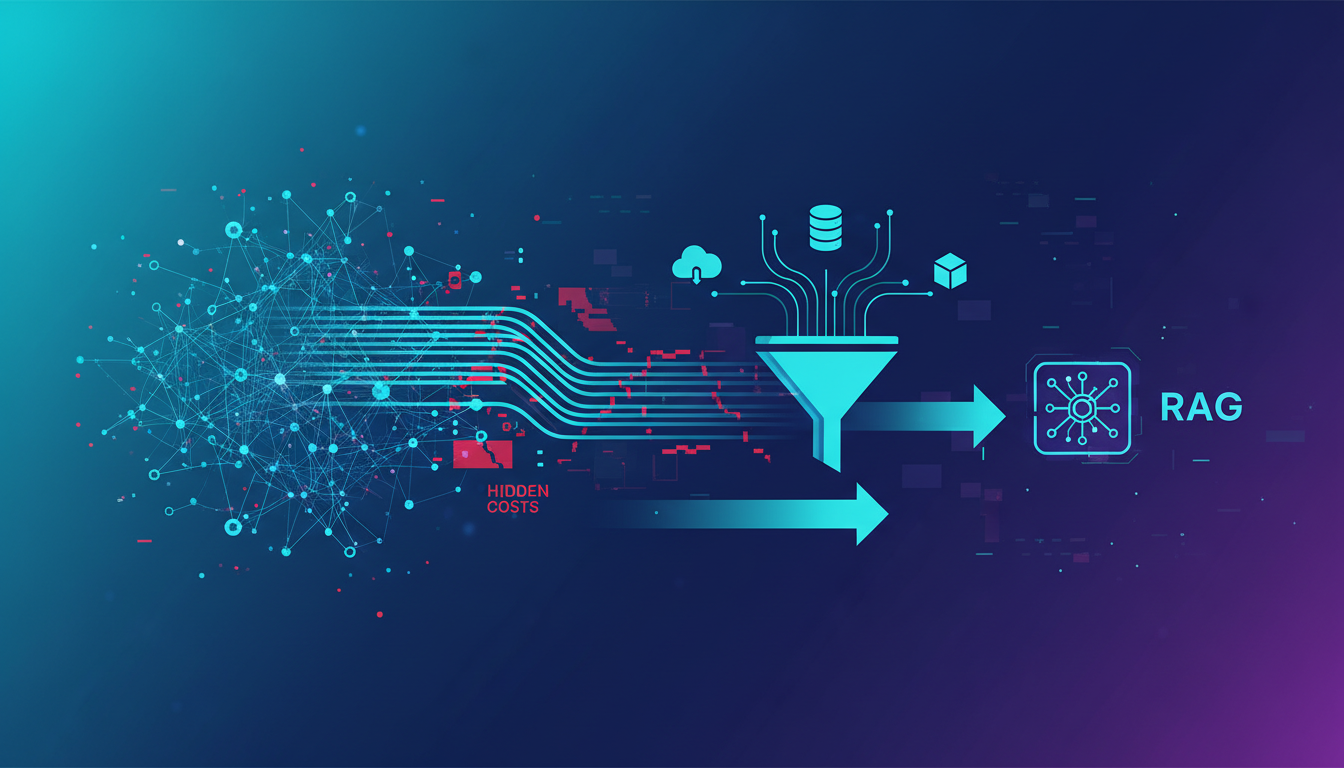
In today's enterprise environments, RAG (Retrieval-Augmented Generation) systems are vital for efficient data processing and retrieval. Typically, these systems rely on multiple databases to manage different tasks, such as vector searches, relationship tracing, metadata storage, and caching. While each database is designed to solve a specific need, the combination often leads to significant coordination challenges and hidden costs that are not immediately apparent.
The Hidden Tax of Multi-Database RAG Architectures
A typical RAG setup might include:
While each of these databases excels in its domain, the integration of these disparate systems can introduce substantial complexity. The need for synchronization and coordination among these databases often results in performance degradation and increased latency. Each database maintains its own connection pool, consistency model, and query language, which can lead to inefficiencies.
The Synchronization Blindspot: When Your Databases Disagree
Multi-database architectures inherently bring synchronization challenges. Consider the following:
Eventual Consistency Conflicts : The asynchronous nature of updates across different databases can lead to inconsistencies. A vector database might update embeddings, while the document store hasn't indexed these changes yet.
Transaction Boundaries : Coordinating updates across multiple databases without a unified transaction model can be problematic, often requiring complex distributed transaction logic.
Schema Drift : As each database evolves, schema changes can lead to inconsistencies that impact data reliability and accuracy.
These challenges highlight the need for a more integrated approach to managing RAG systems.
The Developer Experience Penalty
The complexity of managing multiple databases doesn't stop at the infrastructure level—it extends to the developer experience. Developers often need to:
This "glue code" often becomes more substantial than the actual business logic, diverting valuable development resources from building features to maintaining infrastructure.
The Cost Equation Nobody Calculates
When planning RAG infrastructure, organizations typically focus on direct costs like database hosting fees and compute power. However, the hidden costs of multi-database architectures can be substantial:
Engineering Time : A significant portion of developer hours can be consumed by managing database coordination, rather than developing core RAG features.
Operational Overhead : Monitoring, security, and maintenance requirements multiply with each additional database.
Performance Costs : Latency introduced by database coordination can negatively impact user experience and business outcomes.
The Infrastructure Consolidation Thesis
The industry is gradually shifting towards consolidation, where multi-model databases can handle various data types and workloads within a single system. This trend is evident as general-purpose databases increasingly absorb specialized features.
While specialized databases may offer superior performance in specific areas, the overall performance gains can be negated by the overhead of coordinating multiple systems. A unified database model aims to reduce complexity, improve consistency, and lower total costs of ownership.
When Multi-Database Architectures Still Make Sense
Despite the consolidation trend, there are scenarios where a multi-database approach remains warranted:
Extreme Scale Requirements : Certain applications require the unmatched performance of specialized databases.
Existing Infrastructure Investment : Organizations with mature, optimized systems may find the transition to a unified model too costly or risky.
Regulatory Data Isolation : Compliance mandates may necessitate the physical separation of data.
The Architecture Decision Framework
Organizations should consider the following when deciding on their RAG architecture:
Performance Needs : Evaluate if a multi-model database meets your latency and throughput needs.
Consistency Requirements : Determine if strong consistency is required across all data types.
Team Expertise : Consider your team's ability to manage multiple databases versus a single, unified system.
Scale and Operational Maturity : Assess whether your current scale and operational capabilities align with a multi-database or consolidated approach.
What This Means for Your RAG Infrastructure Roadmap
The choice between maintaining a multi-database infrastructure and moving towards a consolidated model should be informed by a thorough analysis of current and projected needs. Enterprises must weigh the complexity and cost of their existing architectures against the potential benefits of simplification. As the industry moves towards streamlined solutions, organizations must decide whether to adapt proactively or risk being constrained by legacy complexity.