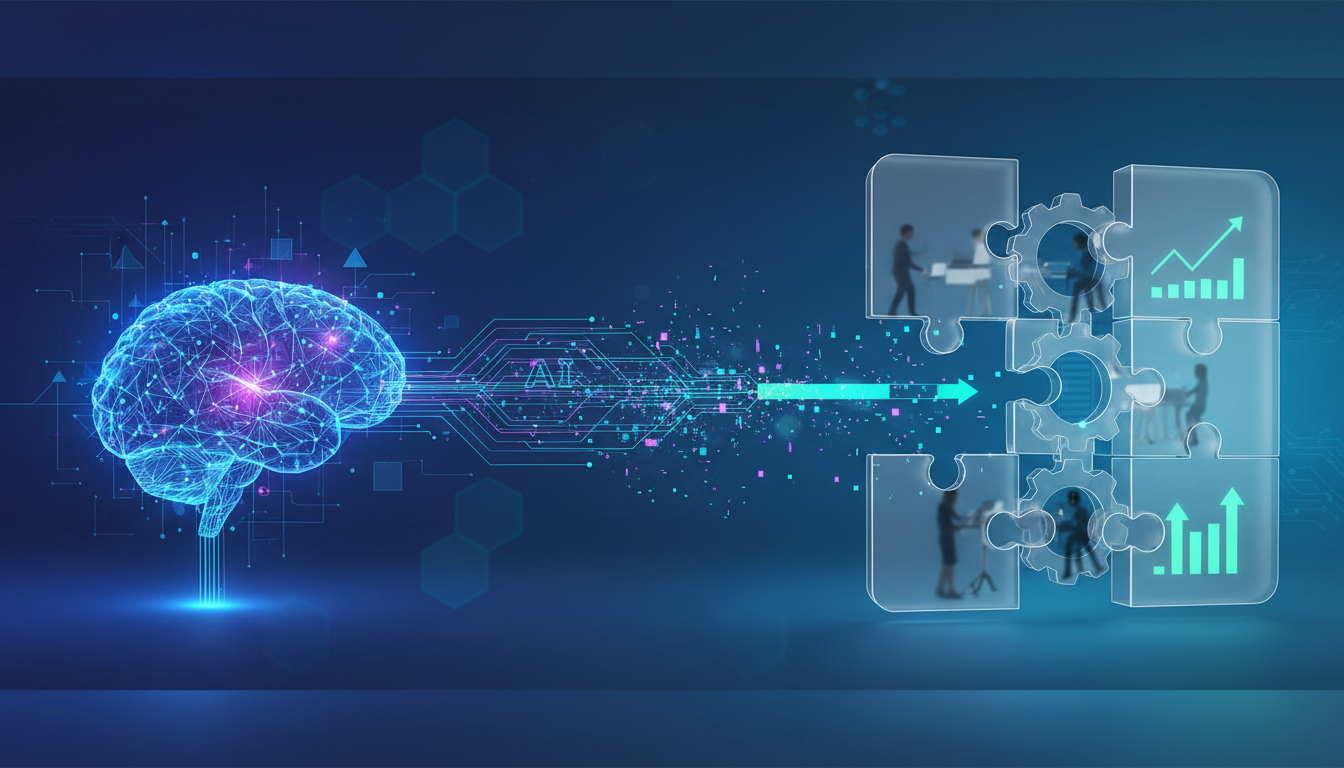
The rapid integration of AI technologies in enterprises is reshaping the landscape of work, creating both opportunities and challenges. The case of Block's significant workforce reduction highlights a crucial issue: the gap between AI's theoretical potential and its practical implementation. As organizations deploy sophisticated AI systems, notably Retrieval-Augmented Generation (RAG), the focus must shift from technical metrics to organizational readiness.
The Organizational Challenge of AI Integration
AI integration is often viewed as a technical challenge, but it's equally an organizational restructuring endeavor. When a RAG system is introduced, it transforms the knowledge retrieval processes, decision-making hierarchies, and skill compositions within an organization. This transformation necessitates a rethinking of existing workflows and roles, as the traditional methods of information management evolve.
RAG systems revolutionize how information is accessed and synthesized. Roles that once required manual research and data synthesis are now streamlined into automated processes, utilizing vector database queries and AI-generated summaries. While RAG can effectively perform these tasks, organizations face the dilemma of managing the transition for employees whose expertise was built around traditional knowledge retrieval methods.
RAG systems democratize access to institutional knowledge, altering the traditional power dynamics. When everyone can access comprehensive corporate knowledge quickly, the necessity for certain management layers diminishes. This democratization challenges existing hierarchies, prompting organizations to reevaluate the roles and value propositions of middle management.
The deployment of RAG systems signals a shift in the skills deemed valuable within an organization. Enterprises must decide whether to retrain existing staff to adapt to AI-augmented workflows or to restructure around individuals who already possess the requisite skills. This decision reflects broader economic concerns: whether AI will lead to deflationary productivity gains or inflationary workforce displacement.
Addressing the RAG Deployment Blind Spot
Many enterprises focus heavily on the technical metrics of RAG systems, such as retrieval precision, query latency, and database performance. While these metrics are necessary to gauge a system's functionality, they fall short of addressing whether an organization is ready to integrate AI successfully.
The real challenge in AI adoption lies in bridging the skills gap at the intersection of domain expertise and AI-augmented workflows. Organizations need retrieval engineers who understand both vector search optimization and domain-specific knowledge structures. Additionally, AI-native knowledge workers must develop new literacy skills to navigate environments where the emphasis shifts from information access to synthesis.
Organizations must also consider the role of organizational designers who can restructure workflows to integrate RAG capabilities without losing critical institutional knowledge. This aspect is crucial, as the tacit knowledge carried by employees could be lost if not properly documented before workforce reductions.
The Stages of RAG Integration and Their Challenges
The journey of RAG integration typically unfolds in distinct phases:
Technical Proof of Concept : The RAG system demonstrates its ability to enhance information retrieval and outperform manual processes.
Pilot Deployment : Initial deployments in controlled environments show significant productivity gains.
Broader Rollout : Organizations aim to scale these gains across standard workflows.
Organizational Friction : Resistance emerges from teams and managers whose roles are threatened by AI capabilities.
Leadership Decisions : Organizations face the choice of restructuring to leverage RAG fully or scaling back to minimize disruption.
Navigating the Integration Crisis
To avoid the pitfalls experienced by companies like Block, organizations must:
The Path Forward: Balancing Efficiency with Continuity
The Federal Reserve's divided stance on AI's economic impact underscores the unpredictability of AI adoption outcomes. Enterprises must carefully consider whether to use RAG systems to augment existing workers or replace them, and whether to invest in reskilling programs or hire externally.
The integration of RAG systems is not merely a technical endeavor—it is a comprehensive organizational transformation. Successful deployment hinges on the ability to balance efficiency gains against the continuity of organizational knowledge and culture. As enterprises navigate this transformation, they will determine whether they contribute to a deflationary or inflationary future shaped by AI technologies.