
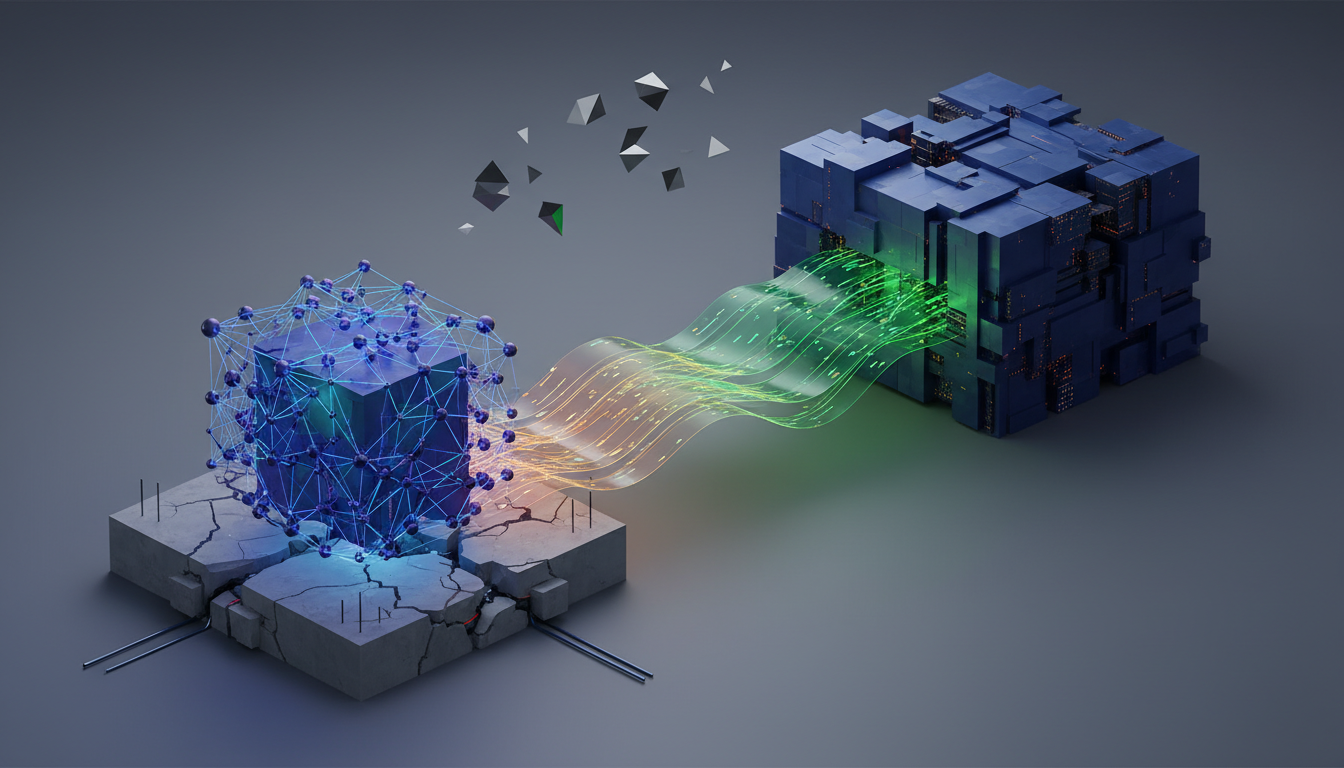
In the world of enterprise AI, the successful completion of a Retrieval-Augmented Generation (RAG) pilot is often celebrated as a significant milestone. The initial proof-of-concept usually delivers impressive results, with queries returning relevant context and Large Language Models (LLMs) generating accurate responses. Stakeholders are left nodding approvingly at polished demos. However, the real challenge begins when organizations attempt to scale these pilots to production. It is here that the infrastructure reality strikes, presenting a formidable hurdle that many teams are ill-prepared to tackle.
The CPU-to-GPU Infrastructure Reckoning
The transition from CPU-based infrastructures, commonly used in RAG pilots, to GPU-native architectures is becoming increasingly necessary. Initially, CPU setups might suffice for handling modest query volumes and simple vector databases. However, as demand scales, these systems falter. The assumption that performance will scale linearly with added resources is a common misconception. In reality, as the size and complexity of data grow, CPU-based systems struggle with the computational overhead required for vector similarity searches, resulting in latency spikes.
To address these challenges, platforms like VAST Data's CNode-X have emerged, leveraging GPU-native vector search acceleration. By utilizing NVIDIA’s CUDA-accelerated infrastructure, these platforms transform performance capabilities, offering a 44% reduction in query time and an 80% reduction in cost compared to traditional architectures. This shift is not just about performance—it represents a fundamental architectural transformation.
The Agentic Memory Architecture Gap
Another critical challenge is the transition from stateless RAG systems to multi-agent systems with persistent memory. In pilot stages, the stateless model—where queries are processed independently—suffices. However, production environments require agents to maintain memory across multiple sessions and interactions. This necessitates infrastructure that supports persistent memory, allowing agents to retain context and state over time.
Current CPU-based architectures are ill-suited for this task, as they are optimized for simple request-response patterns. In contrast, GPU-accelerated platforms like CNode-X are designed to handle these more complex agentic workflows. With integrated context memory, they enable agents to maintain state without succumbing to memory bottlenecks, offering a coherent pipeline that integrates retrieval, analytics, and agentic workflows seamlessly.
The Hidden Cost Explosion
One of the most deceptive aspects of RAG pilot success is the hidden cost explosion that occurs during production scaling. Initial pilot ROI calculations are often based on constrained workloads that conceal infrastructure inefficiencies. However, as query volumes increase and agent coordination becomes more complex, costs can escalate exponentially.
Traditional CPU-based infrastructures exacerbate this issue. They require additional resources to compensate for architectural limitations, leading to spiraling costs. In contrast, GPU-native infrastructures are designed to handle large-scale workloads more efficiently, reducing the need for excessive resource allocation and delivering significant cost savings.
The Coherent Pipeline Imperative
The concept of a "coherent pipeline" is central to overcoming these infrastructure challenges. Pilot systems often succeed by piecing together disparate components, but production systems require an integrated approach. A coherent pipeline ensures that data flows seamlessly through retrieval, analytics, and agentic workflows without architectural discontinuities.
Such integration allows for optimization that fragmented architectures cannot achieve. When every component—from SQL queries to vector searches to agent orchestration—is executed on CUDA-accelerated infrastructure, the performance is optimized end-to-end. This eliminates the latency associated with data movement between different execution environments, enabling interactions that are faster and more efficient.
The Infrastructure-First Mindset
The most crucial takeaway from the transition to production-grade RAG systems is the need for an infrastructure-first mindset. Infrastructure should not be an afterthought, addressed only after application logic and value demonstrations are complete. Instead, it should be a foundational consideration that informs every aspect of system design.
By recognizing infrastructure as a strategic enabler, organizations can avoid the pitfalls of scaling CPU-based pilot architectures and instead embrace GPU-native solutions that support advanced agentic workflows. This shift not only reduces costs but also unlocks new capabilities, allowing for the deployment of sophisticated multi-agent systems that can tackle complex problems over extended periods without losing context.
Conclusion: Preparing for the Future
As enterprise AI continues to evolve, the infrastructure decisions made today will determine the success of tomorrow's production systems. The partnership between VAST Data and NVIDIA represents a pivotal moment, highlighting the importance of GPU-native, coherent pipeline infrastructures for scalable RAG systems. By adopting an infrastructure-first approach, organizations can ensure they are prepared to meet the demands of production environments, paving the way for innovative agentic systems that redefine what is possible in enterprise AI.