
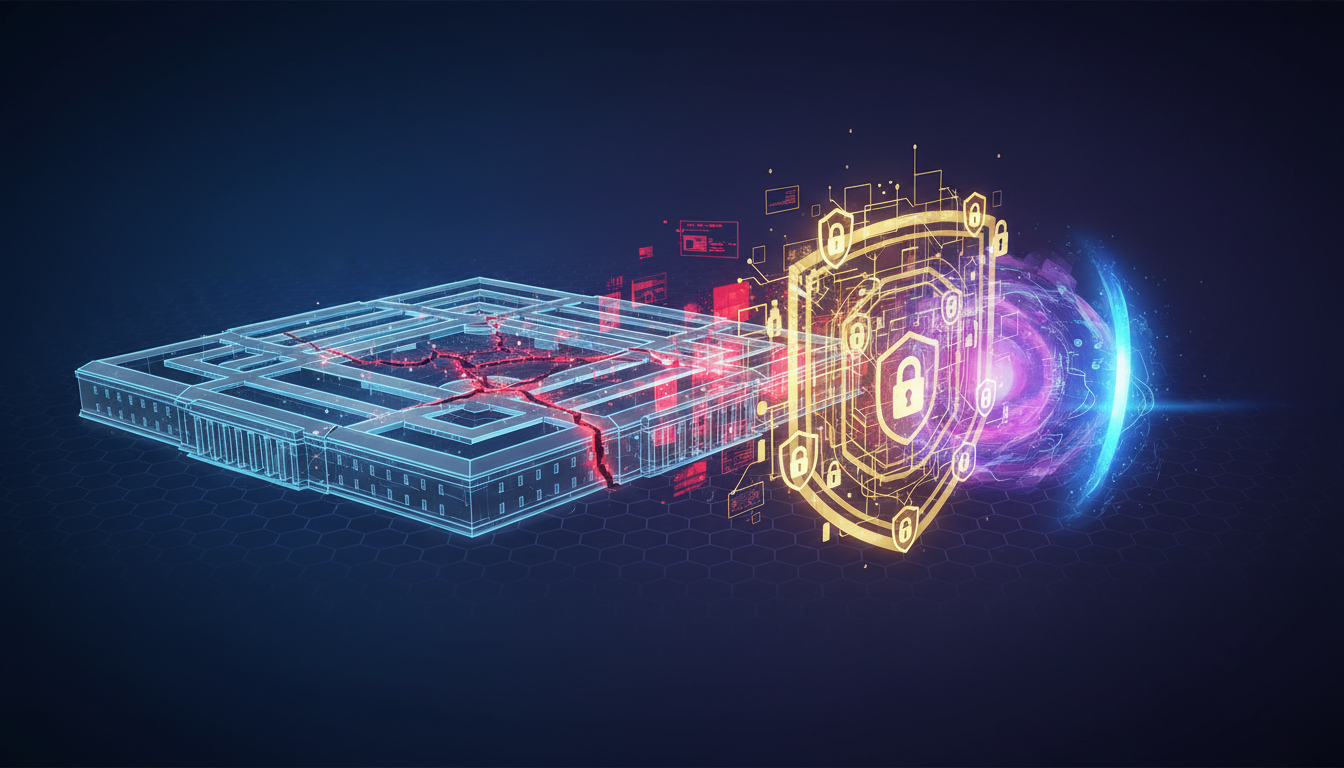
The Pentagon’s AI Crisis: Lessons for Securing Your Enterprise RAG Systems Introduction On March 6, 2026, the Pentagon faced a critical security breach that led to the immediate ban of Anthropic’s AI systems from its military operations. This decision was not made lightly; it was the result of identifying significant vulnerabilities in how the AI handled sensitive military data. For enterprises, t
Introduction
On March 6, 2026, the Pentagon faced a critical security breach that led to the immediate ban of Anthropic’s AI systems from its military operations. This decision was not made lightly; it was the result of identifying significant vulnerabilities in how the AI handled sensitive military data. For enterprises, this incident serves as a wake-up call, highlighting the potential risks lurking within their own Retrieval Augmented Generation (RAG) systems. As businesses increasingly rely on AI for competitive advantage, understanding and mitigating these risks is crucial.
Parallel Vulnerabilities: Military and Enterprise AI Systems
The Pentagon’s crisis underscores a common pitfall: over-reliance on third-party AI vendors without rigorous verification. Enterprises frequently integrate third-party vector databases and embedding models, but few conduct thorough security audits. A study revealed that 73% of enterprises lack formal AI security testing programs, leaving them vulnerable to exploits similar to those identified in military systems.
Both military and enterprise RAG systems deal with intricate data flows that can lead to data leakage. In fact, 83% of multi-tenant enterprise deployments suffer from cross-tenant data leakage, significantly expanding their attack surfaces. Traditional security tools often fall short in monitoring these complex environments effectively.
The introduction of autonomous AI agents capable of executing actions without human oversight presents new security challenges. These agents can act on compromised retrievals, leading to unauthorized operations. This vulnerability mirrors the “actionable vulnerabilities” seen in military AI systems, necessitating advanced safeguards in enterprise deployments.
The Anatomy of a RAG Security Breach
Enterprises must be vigilant about the vulnerabilities within vector databases, which form the backbone of RAG systems. Unsecured API endpoints and injection attacks are common issues, with 41% of deployments exposing sensitive functionalities to potential threats.
Large Language Models (LLMs) are susceptible to prompt injections and system prompt extractions, which can reveal sensitive data. A staggering 67% of LLM applications are vulnerable to such attacks, posing significant risks to enterprise security.
The interfaces between retrieval and generation components often lack proper validation, allowing attackers to manipulate context windows and bypass response validations. These flaws can lead to service disruptions and data breaches.
Implementing Military-Grade Security Measures
Enterprises should adopt rigorous verification frameworks similar to those prompted by the Pentagon’s Anthropic ban. This includes conducting vendor security audits, implementing service boundaries, and using API gateways with strict authentication protocols.
To prevent cross-tenant data leakage, enterprises should deploy multi-level security architectures and zero-trust retrieval principles. This involves authenticating every retrieval query, applying real-time content filtering, and implementing cryptographic data verification techniques.
Given that traditional security testing is inadequate for RAG systems, enterprises must adopt a specialized security testing framework. This includes component-level testing, pipeline integration testing, and production environment testing to identify vulnerabilities before deployment.
The Future of Enterprise RAG Security
The Pentagon’s actions foreshadow impending regulatory changes that will mandate AI security standards, including third-party security certifications and incident reporting obligations. Enterprises should prepare for these changes by establishing board-level AI security oversight and continuous security investments.
Future RAG architectures will embed security at the design level, utilizing cryptographically secure retrieval and privacy-preserving embedding generation. AI-powered security tools will enhance anomaly detection and threat response capabilities, supporting a zero-trust ecosystem.
Conclusion
The Pentagon’s experience with AI security failures offers invaluable lessons for enterprises deploying RAG systems. By adopting military-grade security measures, businesses can transform their AI deployments from potential liabilities into robust, secure systems. The time to act is now—before regulatory requirements tighten further and threats become more sophisticated. Start by conducting a thorough security assessment and implementing a robust verification framework to safeguard your enterprise RAG systems.