Unlocking Enterprise AI: The Essential Guide to the Top 10 RAG Tools of 2026 Introduction The rapid adoption of Enterprise AI has exposed a critical gap—large language models (LLMs) often struggle with accessing up-to-date and reliable enterprise data. This problem leads to inaccurate responses and compliance issues, a significant concern for CTOs and data leaders alike. Retrieval-Augmented Genera
Introduction
The rapid adoption of Enterprise AI has exposed a critical gap—large language models (LLMs) often struggle with accessing up-to-date and reliable enterprise data. This problem leads to inaccurate responses and compliance issues, a significant concern for CTOs and data leaders alike. Retrieval-Augmented Generation (RAG) tools have emerged as the solution, bridging this gap by connecting LLMs to real-time and proprietary data sources. This integration significantly enhances the accuracy, trustworthiness, and relevance of AI outputs.
According to industry benchmarks, enterprises deploying RAG architectures see a dramatic improvement in answer accuracy and a substantial reduction in hallucinations. This article provides an in-depth comparison of the top 10 RAG tools of 2026, focusing on their features, pricing, and real-world enterprise applications.
Why RAG Tools Are Critical for Enterprise AI in 2026
Enterprises are moving beyond the capabilities of generative AI, seeking systems that can provide grounded, explainable responses while maintaining compliance. RAG tools serve as a crucial component in this transformation, acting as a bridge between data platforms and LLMs. They facilitate:
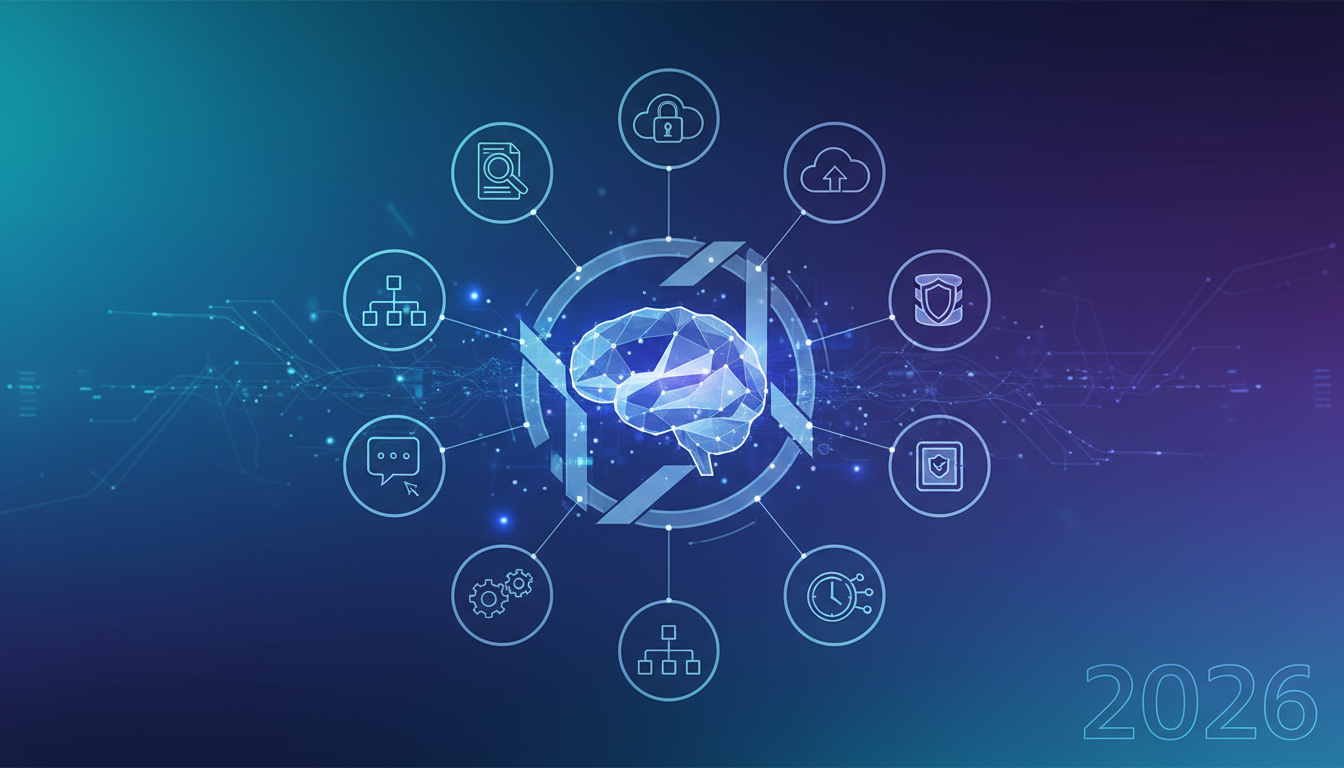
RAG tools introduce a new layer to enterprise architecture, encompassing data ingestion, indexing, vector retrieval, and LLM context injection, thus transforming AI from an experimental to an operational tool.
RAG tools bring several benefits to enterprises:
RAG tools are a strategic data architecture decision, necessitating a re-evaluation of data quality, governance, metadata management, and retrieval latency.
What Are RAG Tools? Architecture and Core Components
RAG tools enhance LLM outputs by injecting relevant external context during the inference process. A typical RAG pipeline involves:
Modern RAG tools are characterized by:
The architecture of RAG tools directly affects performance, cost, and scalability, making it a critical choice for enterprises.
Top 10 RAG Tools Compared – Overview
Meilisearch is optimized for speed and simplicity, making it suitable for RAG pipelines requiring low-latency retrieval. It's ideal for developer teams focused on rapid deployment, though its enterprise governance features are still developing.
A framework rather than a tool, LangChain offers a comprehensive solution for building RAG pipelines, including agents and integrations. It suits complex multi-step architectures but requires a mature engineering approach.
RAGatouille excels in precision retrieval through token-level accuracy, ideal for domain-specific applications like legal and scientific research.
Verba offers a UI-driven approach, enabling non-technical users to create document-based chat systems quickly. It’s great for rapid prototyping but not suitable for enterprise-scale use.
Designed for enterprise-grade RAG pipelines, Haystack provides modular architecture and production readiness, making it suitable for organizations transitioning from prototype to production.
Embedchain simplifies RAG pipeline creation with a minimalistic framework. It's perfect for quick experimentation but lacks the scalability needed for enterprise deployments.
LlamaIndex is a robust data framework for RAG, facilitating structured ingestion and retrieval across diverse data sources. It’s ideal for scalable, flexible RAG pipelines.
Integrating vector search directly into its database, MongoDB simplifies RAG architecture but may miss advanced optimization features of specialized databases.
Pinecone offers high-performance similarity search in RAG pipelines, providing excellent scalability and performance but at a cost and potential vendor lock-in.
An open-source platform for large-scale, real-time retrieval, Vespa is suitable for enterprises with advanced infrastructure capabilities.
Conclusion
RAG tools have become a cornerstone of reliable enterprise AI systems. The choice of a RAG tool should align with an organization’s architecture, scale, and business objectives, rather than seeking a one-size-fits-all solution. As AI continues to evolve, investing in robust RAG architectures is crucial for leading the next wave of enterprise intelligence.