
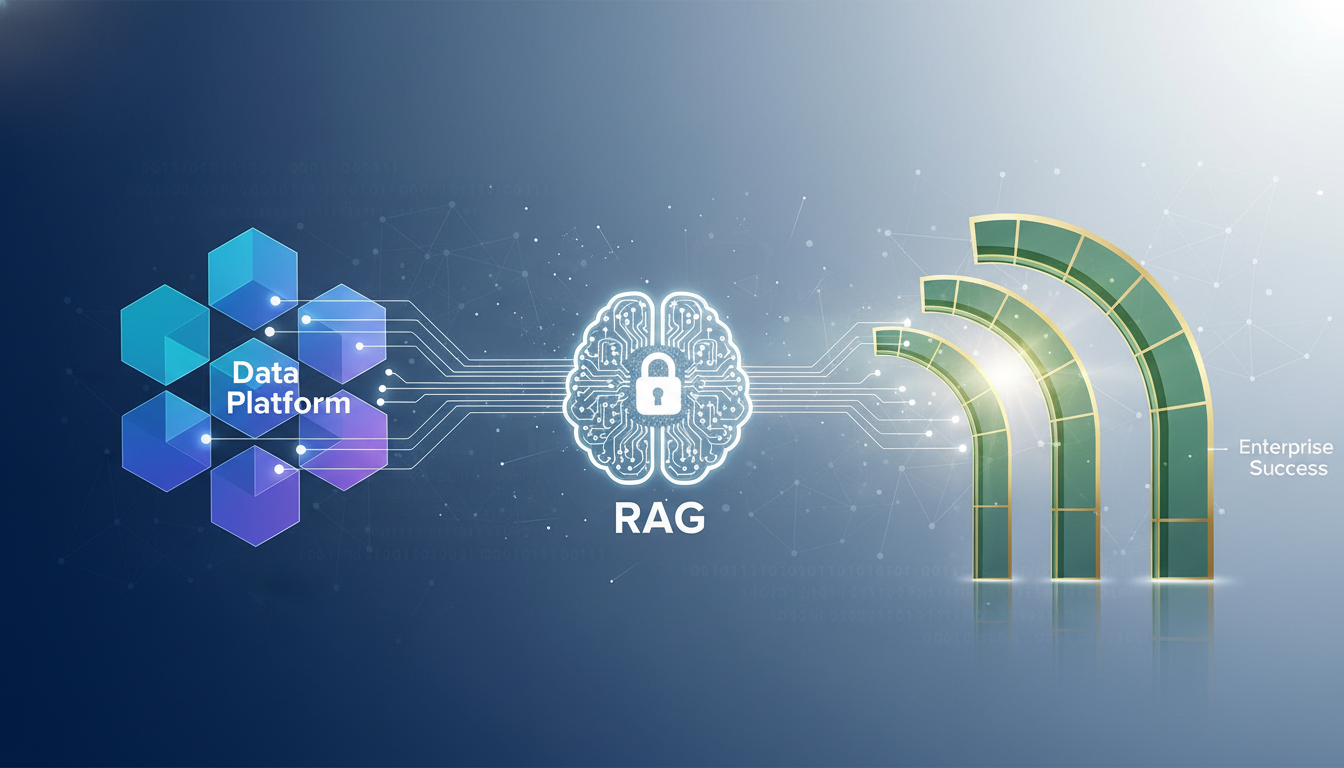
Unlocking RAG Success: The Imperative of Modern Data Platforms in Enterprises Introduction As enterprises increasingly adopt Retrieval-Augmented Generation (RAG) systems, the spotlight is shifting towards the foundational elements that drive their success. While advanced AI models often steal the limelight, the true enabler of RAG success lies in modern data platforms. These platforms provide the
Introduction
As enterprises increasingly adopt Retrieval-Augmented Generation (RAG) systems, the spotlight is shifting towards the foundational elements that drive their success. While advanced AI models often steal the limelight, the true enabler of RAG success lies in modern data platforms. These platforms provide the crucial infrastructure needed to convert disparate data into actionable intelligence, ensuring AI outputs are reliable, relevant, and timely.
The Enterprise Shift: Why RAG Demands Modern Data Platforms
Traditional AI systems were built on static datasets, rendering them inflexible in dynamic environments. In contrast, RAG systems are designed to fetch real-time, contextual information during inference. This dynamic approach demands a modern data platform capable of supporting continuous data ingestion and retrieval. According to industry experts, such data-driven architectures can enhance operational efficiency by 20–30%, underscoring the necessity of modern data platforms in RAG implementations.
The Cost of Legacy Data Architectures
Legacy data architectures, often characterized by their batch processing and siloed data storage, are ill-equipped to meet the demands of RAG systems. Key limitations include slow data pipelines, fragmented storage solutions, and insufficient search capabilities. Moreover, poor data quality in these architectures can cost enterprises millions, leading to erroneous AI outputs and increased business risks.
What Defines a Modern Data Platform for RAG
A modern data platform for RAG is a comprehensive ecosystem that supports the entire lifecycle of data-driven AI systems. It typically includes:
These components work together to ensure that AI outputs are grounded in the enterprise's data reality.
Why Traditional Data Warehouses Fall Short
Traditional data warehouses were primarily designed for analytics, not AI retrieval. They often lack support for unstructured data, semantic search capabilities, and real-time data processing. In contrast, modern data platforms, such as data fabrics and lakehouses, address these shortcomings by providing a more integrated and flexible approach to data management.
The Role of Data Quality in RAG Success
In RAG systems, the quality of input data is directly proportional to the reliability of AI outputs. Poor data quality can lead to incorrect retrievals and increased AI hallucinations. Enterprises must focus on key data quality dimensions such as accuracy, completeness, and timeliness to ensure effective RAG operations.
Vector Search and Retrieval: The Heart of RAG
At the core of RAG lies semantic retrieval, which traditional keyword-based search methods fail to deliver. Vector databases offer a solution by enabling embedding-based similarity search and context-aware retrieval, essential for high recall and precision in AI operations.
Real-Time Data Pipelines: Enabling Context-Aware AI
RAG systems thrive on fresh, contextual data. Legacy batch processing introduces delays, resulting in outdated responses and reduced trust in AI. Modern data platforms, with their streaming ingestion and event-driven architectures, ensure that AI systems operate on the most current data available.
Architecture Blueprint: Building Modern Data Platforms for RAG Success
A robust architecture for a modern data platform orchestrates multiple layers seamlessly:
This architecture ensures AI outputs are grounded in enterprise truth.
Conclusion
RAG represents a fundamental shift in how enterprises leverage AI. Modern data platforms are not optional; they are critical to unlocking the full potential of RAG systems. Enterprises that embrace these platforms will lead in AI innovation, decision intelligence, and competitive advantage. As the AI landscape evolves, partnering with experienced data and AI leaders will ensure not just the implementation but sustained success in this new era.