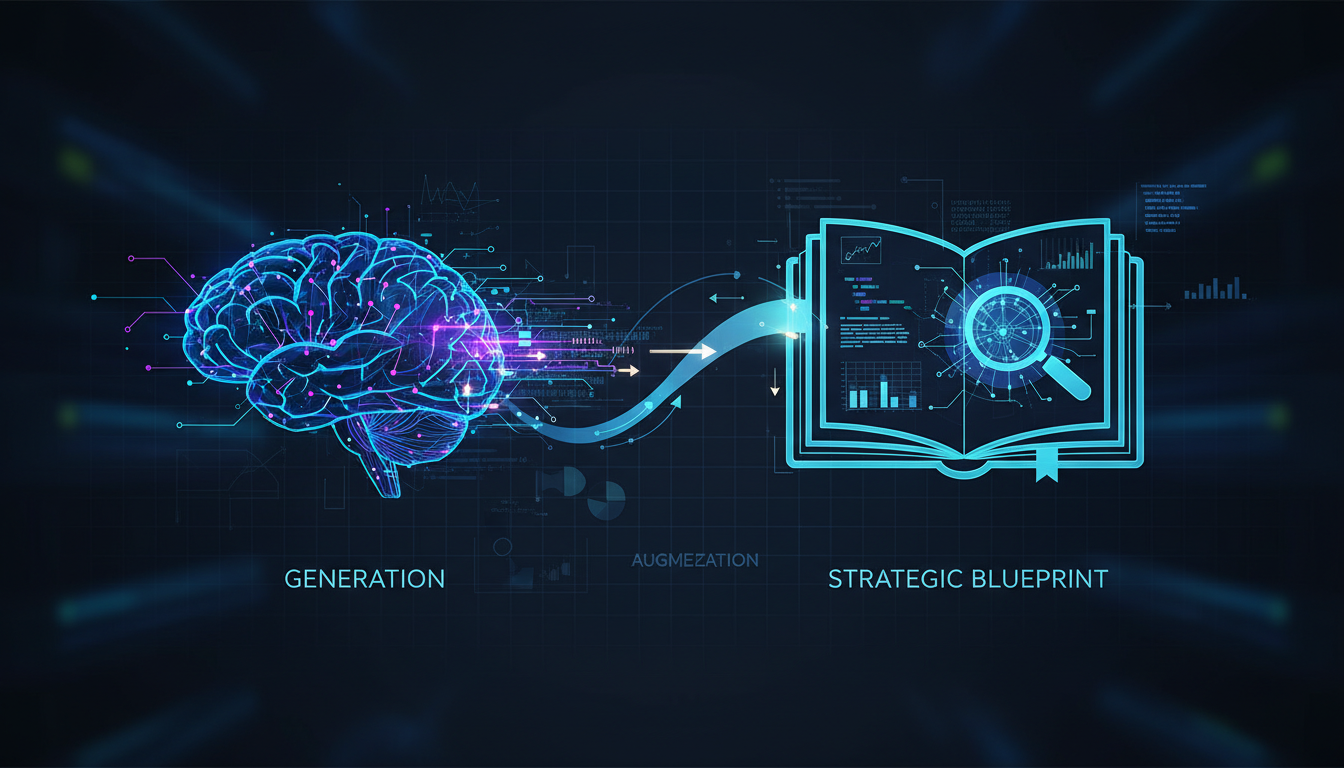
In the fast-evolving landscape of enterprise AI, the allure of Retrieval Augmented Generation (RAG) systems is undeniable. Promising enhanced accuracy and insightful responses, these systems are increasingly adopted by enterprises seeking to leverage AI for data retrieval and generation tasks. However, the reality is stark: many enterprises find their RAG implementations falling short of expectations. According to MIT Sloan Review’s March 2026 analysis, 42% of RAG implementations fail to meet accuracy benchmarks. The root cause of these failures is not technical complexity but strategic missteps.
The Data Foundation Fallacy: Why Your RAG System Is Only as Good as Your Worst Document
The success of a RAG system begins with the quality of data it is built upon. Unfortunately, many enterprises underestimate the challenges posed by their own fragmented and inconsistent data ecosystems. A Forrester Research study revealed that 67% of RAG implementation failures are rooted in data quality issues. These include legacy documents with OCR errors, inconsistent formatting, and outdated information, all of which contribute to inaccurate retrieval results.
Effective document chunking is crucial for RAG system accuracy. The standard approach—splitting documents into fixed-size chunks—often fails for complex enterprise content. Legal contracts and technical specifications, for example, contain hierarchical structures that fixed chunking disrupts. Semantic chunking, which considers content meaning, significantly improves accuracy. By preserving the integrity of complex documents, enterprises can avoid the pitfalls of misaligned retrievals.
The Retrieval Architecture Trap: Choosing Components That Don’t Match Your Query Patterns
Before selecting a vector database or retrieval algorithm, enterprises must map their query ecosystem. Most systems are optimized for simple fact retrieval, yet enterprises often face complex analytical queries that require multi-step reasoning. Without proper alignment, enterprises risk inefficiencies and financial losses. A comprehensive understanding of query patterns ensures that the chosen architecture supports the full range of enterprise needs.
Choosing the right vector database is critical for RAG system performance. Options like Pinecone, Weaviate, Qdrant, and Chroma each have unique strengths, from high-throughput to cost-effectiveness. The decision should be driven by specific enterprise requirements, such as query volume, complexity, and compliance needs, rather than vendor marketing.
The Instructed Retriever Shift
Traditional RAG systems often separate retrieval from generation, leading to inefficiencies in handling complex queries. The emerging paradigm of instructed retrieval integrates these processes, allowing for a more nuanced understanding of query intent. By planning retrieval strategies tailored to each query, enterprises can significantly enhance the relevance and accuracy of generated responses.
The Performance Measurement Gap: Tracking the Wrong Metrics for Enterprise Success
Accuracy is a common metric for evaluating RAG systems, but relying solely on it can be misleading. Systems with high accuracy but overconfident wrong answers can harm decision-making processes. Enterprises must also consider metrics like confidence calibration, retrieval quality, and generation relevance to gain a comprehensive understanding of system performance.
Successful RAG implementations track a range of metrics beyond simple accuracy. Retrieval quality metrics, such as hit rate and mean reciprocal rank, combined with generation quality metrics like answer relevance and faithfulness, provide a fuller picture of system effectiveness. Enterprise-specific metrics, including decision support accuracy and compliance adherence, ensure alignment with business objectives.
The Implementation Blueprint: Building RAG Systems That Actually Work
A thorough data quality audit is the first step toward a successful RAG system. This includes inventorying data sources, standardizing formats, cleaning content, and establishing governance protocols. A well-prepared data foundation is essential for accurate retrieval and generation.
Analyzing historical query logs and categorizing them by complexity helps map query patterns to business processes. This understanding guides the selection of appropriate retrieval and generation strategies, ensuring alignment with enterprise needs.
Matching query patterns with suitable vector databases, retrieval algorithms, and chunking strategies is crucial. The instructed retriever shift highlights the importance of an architecture that plans retrieval strategies based on query intent, enhancing system capability for complex queries.
A phased development approach, from prototyping to full deployment, allows for thorough testing and validation. This includes unit, integration, performance, and user acceptance tests to ensure system robustness and user satisfaction.
A continuous improvement loop involving real-time monitoring, pattern analysis, and parameter optimization ensures that the RAG system remains aligned with business objectives and adapts to evolving requirements.
Conclusion
RAG implementation success hinges on foundational decisions made long before deployment. By focusing on data quality, understanding query ecosystems, and defining meaningful metrics, enterprises can build RAG systems that truly enhance decision-making and operational efficiency. The shift from traditional RAG to instructed retrieval embodies a strategic evolution that aligns AI capabilities with specific business needs, paving the way for transformative AI systems.