
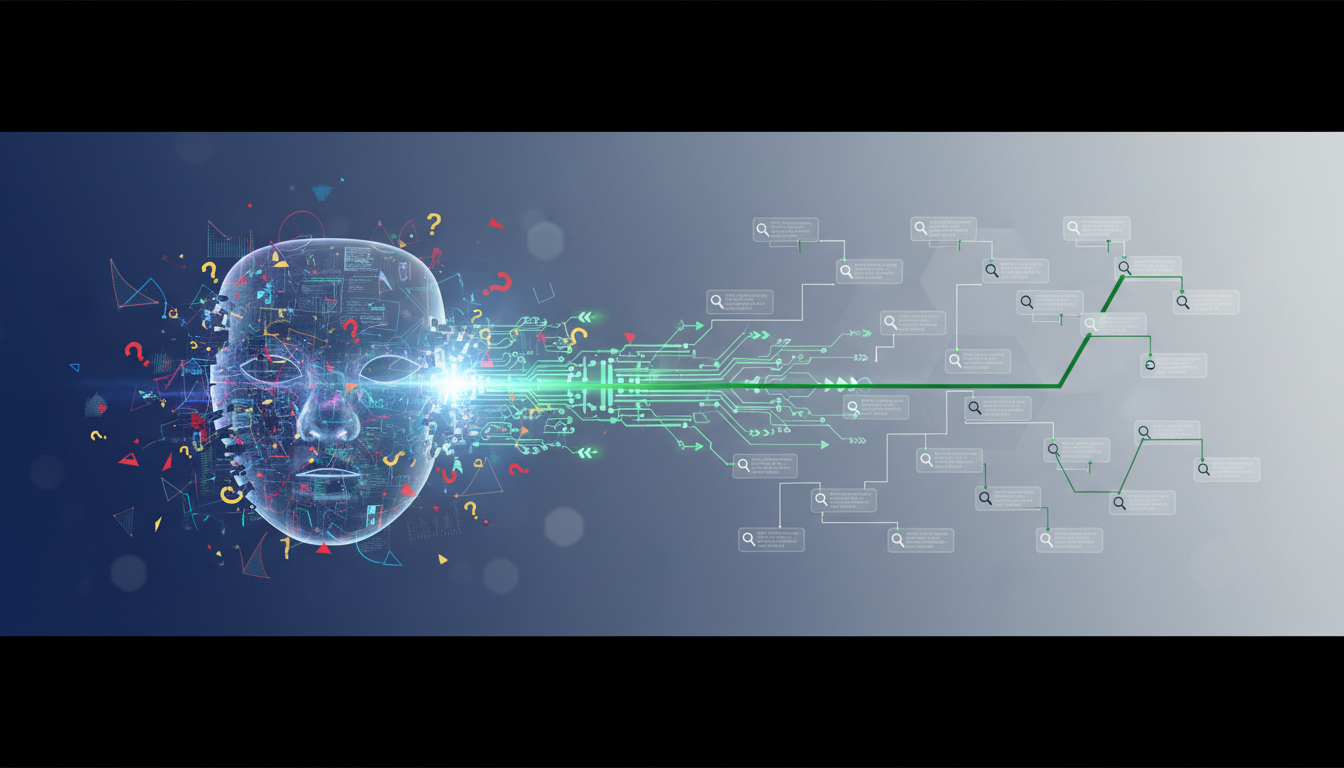
In the fast-evolving world of enterprise AI, the deployment of Retrieval-Augmented Generation (RAG) systems holds the promise of transforming data retrieval and response accuracy. Yet, despite their potential, many RAG systems are plagued by a silent crisis: they seem robust under the hood but often deliver inconsistent, unreliable results. The root of this issue lies in the probabilistic monitoring approaches that many teams rely on. These methods track aggregate signals, such as latency or token usage, without revealing the deterministic pathways from input queries to generated answers. This can result in what is aptly termed "stochastic reliability," where systems appear reliable until they fail catastrophically, with little explanation or path to resolution.
Building Your Deterministic Observability Foundation
To tackle this issue, enterprises must shift from probabilistic monitoring to deterministic tracing. This approach involves capturing comprehensive data on every decision made by the RAG pipeline, from query parsing to the final answer generation. The process begins with implementing comprehensive pipeline tracing, which logs each query's journey in detail, including all transformations and retrieval events. Tools like OpenTelemetry for LLMs can aid this effort by automating the instrumentation of traces, ensuring they are stored with high fidelity and can be queried efficiently.
Define and Track Ground Truth Metrics
For deterministic observability to be effective, it must go beyond vague accuracy metrics and focus on specific, measurable outcomes. This involves running automated evaluations against a golden dataset of validated questions and answers. Key metrics include retrieval precision/recall, answer faithfulness, and answer relevance. By correlating low faithfulness scores with their corresponding traces, patterns of failure can be identified, such as the impact of context window saturation on hallucinations.
Three Strategies for Proactive Failure Detection
With tracing in place, enterprises can transition from reactive debugging to proactive failure detection. One strategy is to establish semantic drift baselines. This involves regular evaluations to track changes in the embedding model's perception of semantic similarity and to detect shifts in query intent distribution. Another approach is implementing deterministic canary tests, which compare the trace outputs of new components against existing ones to ensure reliability before full deployment. Additionally, creating alerts based on trace anomalies can provide early warnings of potential failures, such as low similarity scores or context window saturation.
Two Strategies for Root Cause Analysis and Improvement
When failures occur, deterministic traces enable swift diagnosis and resolution. One effective strategy is enabling trace comparison and replay, which allows teams to compare current and past traces to identify changes or regressions. This capability is invaluable for diagnosing issues, testing fixes, and understanding user-reported problems. Another strategy is correlating traces with data lineage, linking retrieved chunks back to their source documents and ingestion jobs. This helps identify poisoned data and refine ingestion parameters, ensuring that the system continuously improves.
Integrating Observability into Your Development Workflow
To maximize the benefits of deterministic observability, it should be integrated into the development lifecycle from the start. This involves treating traces as test fixtures, converting them into permanent test cases to prevent regression. Additionally, building a feedback loop from production data to retrieval tuning can drive continuous improvement. By analyzing trace data, enterprises can identify hard queries, discover missing knowledge, and fine-tune chunking and embeddings, ultimately enhancing system performance.
Conclusion
The transition from probabilistic to deterministic observability is not just about debugging; it's about building trust in AI systems. By implementing deterministic strategies, enterprises can transform their RAG systems from opaque black boxes into transparent, explainable engines. This shift enables teams to proactively optimize their systems, ensuring reliable performance and fostering trust in AI outcomes. As demonstrated by the financial services team, embracing deterministic observability can redefine the possibilities of production AI, providing clarity and direction for continuous improvement.